Last updated November 21, 2026
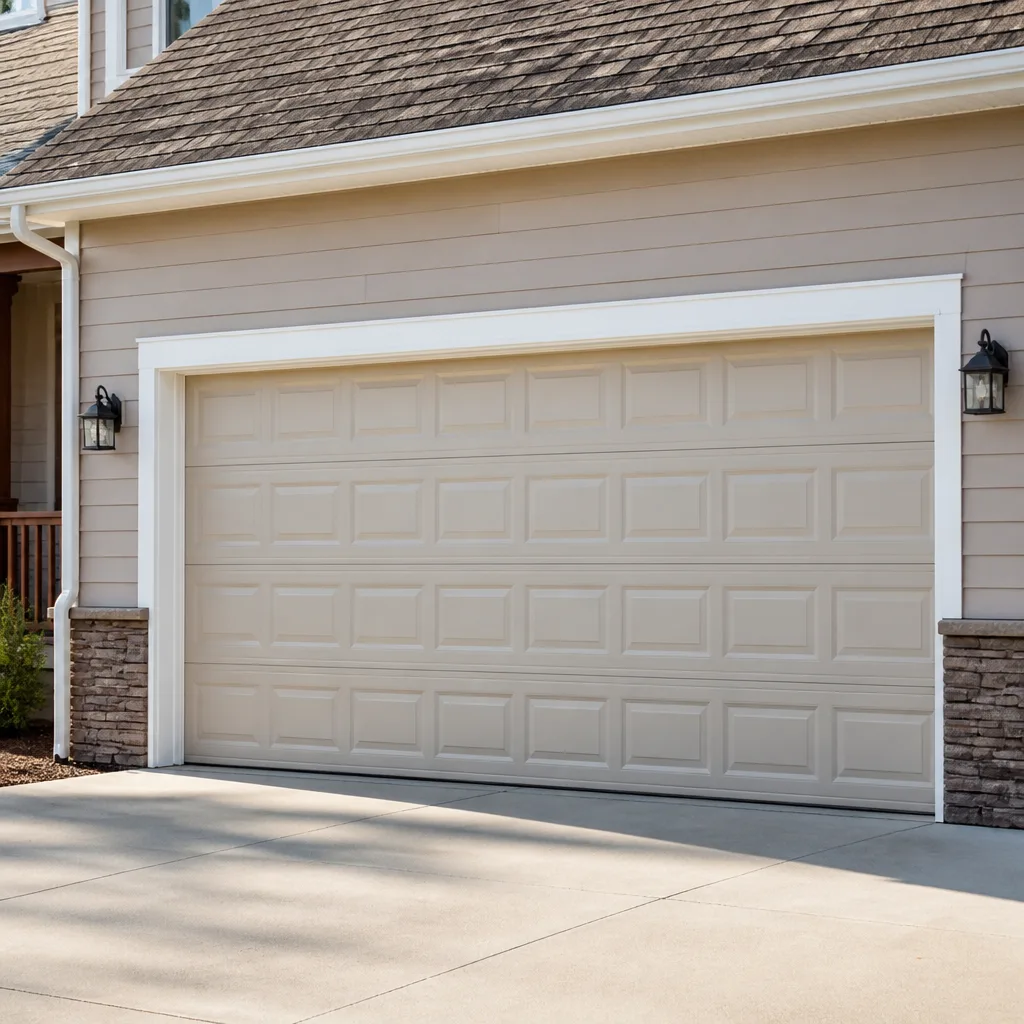 Raised-panel steel
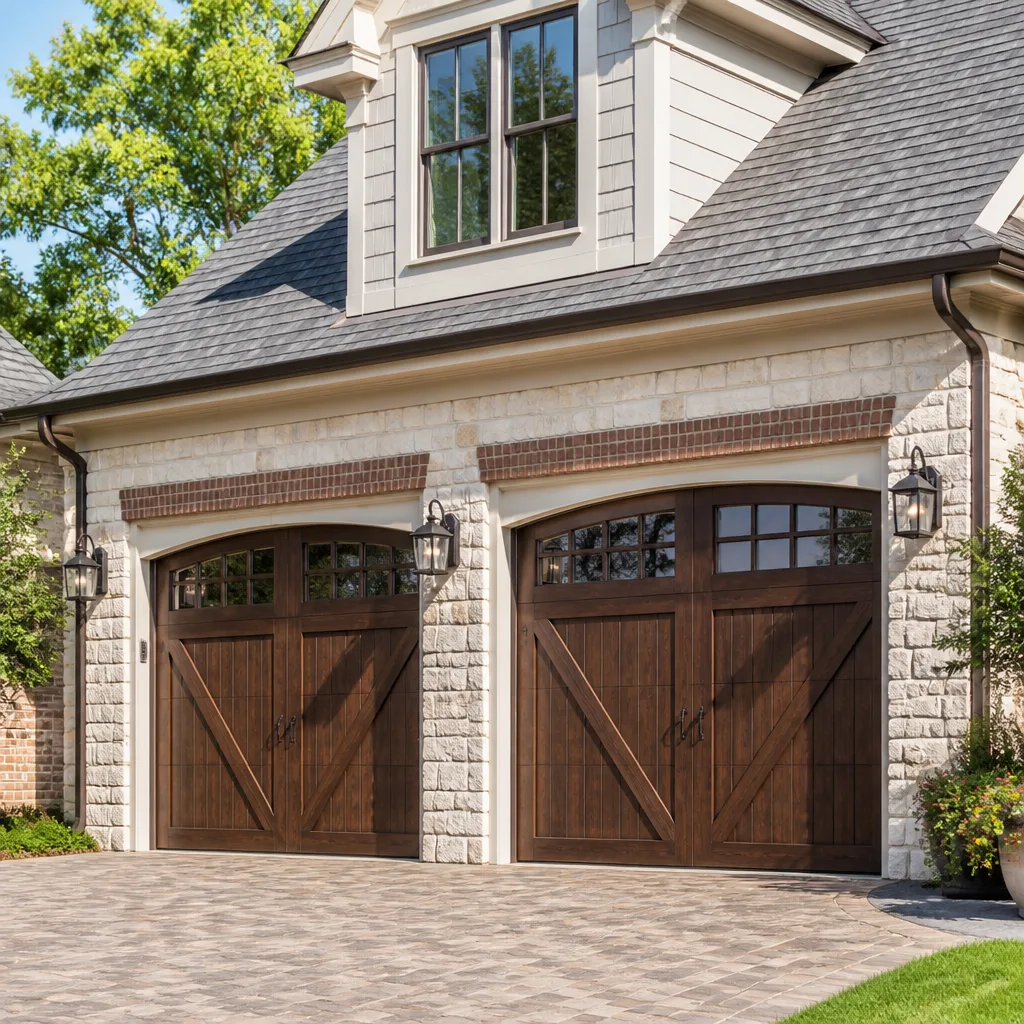 Carriage house
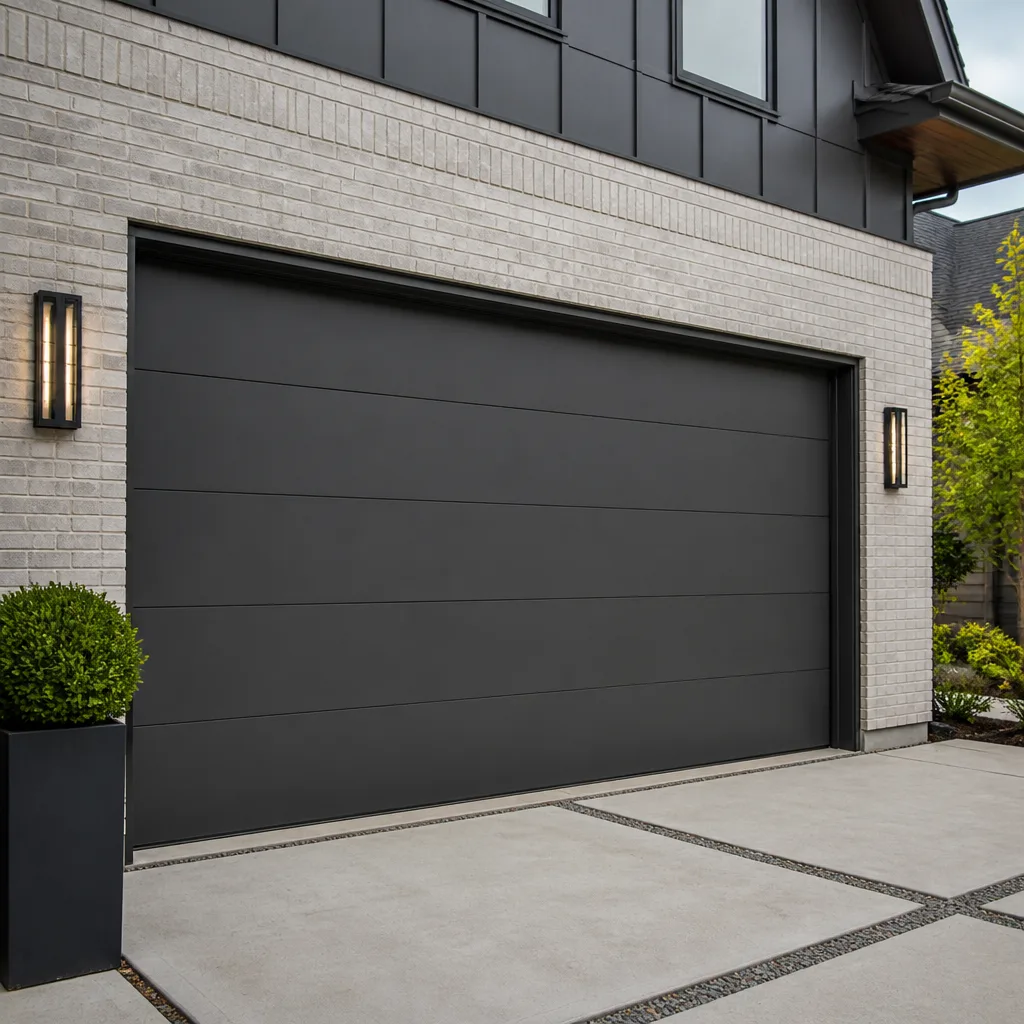 Modern flush
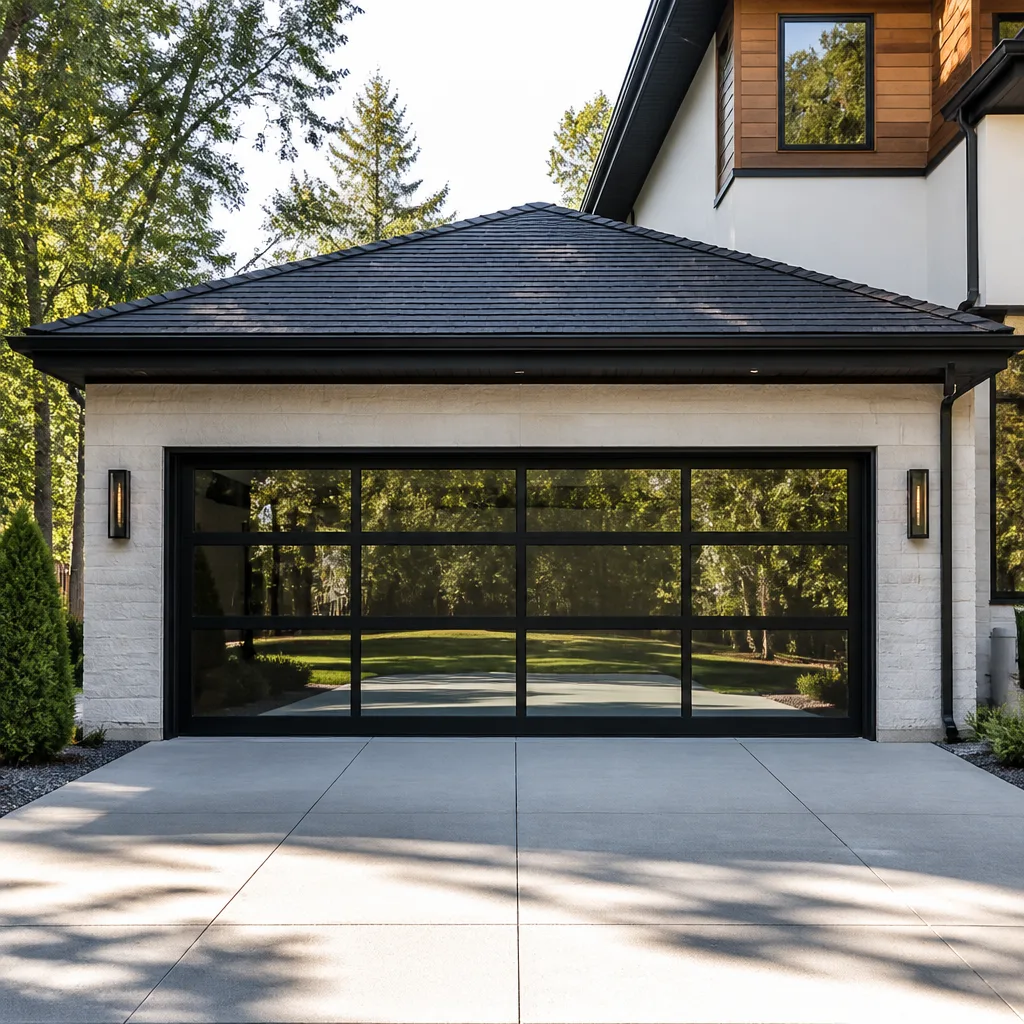 Full-view glass
 LiftMaster openers
 Chamberlain openers
Full 25-point door and opener safety check with every visit - springs, cables, rollers, tracks, and your LiftMaster or Chamberlain opener included
You get a price before we start. It does not change when the pro arrives.
Get your free estimateGarage Door Emergency Preparedness Guide for Brandon Homes
When a torsion spring snaps at 7am on a Tuesday, the car is inside and the door won’t move manually without knowing where the emergency release is. When a hurricane watch is issued 36 hours out, the door is the largest wind-load surface on the house. Neither situation is the time to figure out your plan. Most homeowners picture a garage door emergency as something that happens to other people, on other streets, in other towns. Then a cable lets go a few inches from the ceiling and the whole thing stops being hypothetical at the worst possible moment. This guide walks through the two kinds of emergencies Brandon homes actually face – storm-related failures and mechanical failures that trap cars or leave the house unsecured – and lays out a pre-plan for each, so you’re not standing in the driveway at 10pm guessing what to do next.
Quick Answer
Garage door emergencies in Brandon fall into two categories: storm-related failures (wind damage, impact from debris, doors that won’t stay shut against pressure) and mechanical failures (broken springs, snapped cables, failed openers, a door that leaves the house open). Being prepared means knowing where the emergency release is, how to operate the door manually during a power outage, how to secure an open door temporarily, and what information to have ready when you call for service. Brandon Garage Door Repair Co handles both categories, and everything below is written to get you through the first hour and into a real fix.
Styles & brands we work with
- Raised-panel steel
- Carriage house
- Modern flush
- Full-view glass
- LiftMaster openers
- Chamberlain openers
Table of Contents
- The Two Kinds of Garage Door Emergencies in Brandon
- How to Operate the Door Manually During a Power Outage
- What to Do When a Spring Breaks With the Door Closed and the Car Inside
- Hurricane Preparedness: Wind-Rated Doors, Bracing, and What “Rated” Really Means
- How to Secure an Open or Damaged Door After a Storm
- What to Have Ready Before You Call for Emergency Service
- Seasonal Checks That Prevent Most Emergencies
- Why Brand Familiarity Matters in an Emergency
The Two Kinds of Garage Door Emergencies in Brandon
Brandon sits far enough inland that most of what hits your garage door comes from summer thunderstorms and the occasional tropical system rather than the daily salt-air punishment of the coast. But the mechanical side of the equation is what catches most homeowners off guard. A torsion spring that has been cycling quietly for years can fail on a pleasant Tuesday morning with no storm in sight, and the house is suddenly open, the car is trapped, and the door isn’t moving.
We’ve found it helps to separate the two categories in your head, because the response is different:
- Storm-related: wind damage, impact from flying debris, doors that have been pushed in or out of track, damaged panels, or a door that won’t stay shut against wind pressure. These ramp up during hurricane season, roughly June through November, and during the summer storm pattern that hits the Tampa Bay area most afternoons.
- Mechanical: broken spring, snapped cable, bent track, opener failure, a door locked open, or a door that has come off one side of its track. These are indifferent to the weather and happen year round.
The first category usually gives you a warning window of hours to days. The second doesn’t. That’s why the pre-plan for a mechanical failure is really about knowing the emergency release, the manual operation sequence, and what you can safely do in the gap before a technician arrives. In our experience, homeowners who know those three things handle the first hour calmly. Homeowners who don’t tend to make the situation worse before they call.
How to Operate the Door Manually During a Power Outage
The emergency release is the single most important thing in your garage, and most people have never touched it. It’s a cord, usually red and usually hanging from the trolley that rides on the opener rail. When the opener has power and the door is closed, pulling that cord disconnects the door from the opener so you can lift it by hand. That’s the theory. The practice is where people run into trouble, and it’s the most common thing we walk callers through.
Here’s the safe sequence for manually operating a sectional door during a power outage:
- Make sure the door is fully closed first. Disconnecting a door that’s partly open, or under tension, is dangerous. The spring is what’s holding the door up in that state, and the disconnect turns a controlled system into an uncontrolled one.
- Pull the release cord straight down and toward the door, not toward the ceiling. A sharp yank at an angle can jam the trolley.
- Lift the door slowly with both hands, on a panel boundary or handle. If it feels unusually heavy, stop. A door that won’t lift easily by hand has a spring or cable problem, and forcing it can bring the door down.
- Prop it open before you reach for the car. Manual doors don’t stay up on their own if the spring is compromised. A door that falls onto a car or a person is the worst outcome of an outage, and it’s entirely preventable.
- Reconnect deliberately when power returns. Lower the door fully, pull the release cord again to re-engage the trolley, then cycle the opener once to confirm the door is back on the motor.
The common mistake is pulling the emergency release with the door partway open, then trying to lift it by hand. That’s when the door comes down hard, or when the trolley jams and you can’t re-engage the opener without service. If you’re not sure the door is fully closed, walk out and check before you pull anything. If your opener has been acting up before the outage, that’s usually an opener problem worth a diagnostic rather than something to work around repeatedly. Learn more about garage door opener repair before the failure, not after.
What to Do When a Spring Breaks With the Door Closed and the Car Inside
This is the scenario that generates the most anxious calls we take. The door is shut, the car is inside, and the door won’t open. Sometimes there’s a loud bang from the garage and then nothing. Sometimes the opener runs but the door doesn’t move. Either way, the impulse is to force the door up and get the car out. Don’t.
Torsion springs are under enormous tension even when the door is closed. When a spring breaks, that energy has to go somewhere, and it’s already done so. The door is now being held down by its weight and the remaining spring, if any, with nothing counterbalancing it. Forcing the door up by hand in that state can bring the door down, snap a cable, or pull the track out of the header. Springs are not a DIY job, and a broken spring with a closed door is the wrong moment to test that.
Here’s what to do instead:
- Stop using the opener immediately. Continuing to run the motor on a broken spring strains the opener and can damage the rail, the trolley, or the motor itself. A repair becomes a replacement faster than you’d think.
- Look for a second door. If your home has two bays, one is still working. Move the car through the other door if you can.
- If you have to get the car out, call first and describe the situation. A technician can talk you through whether a manual lift is safe given what you’re seeing, or whether to wait. In our experience, roughly half the time a closed-door spring break can be safely opened by hand with the right technique and a second person. The other half, it can’t. The call sorts that out in two minutes.
- If the door does come up, prop it before you move the car. Never stand under a door held only by a compromised spring.
- Don’t try to replace the spring yourself. This is the most dangerous job in the trade, and the injury record is not kind to homeowners who attempt it.
Spring repair is a named service for us, handled with the right tools and the right technique, and it’s the one call where we’d rather you phone before touching anything. Emergency availability exists precisely because a closed-door break with a car inside is a same-day problem, not a next-week appointment. If you’re reading this ahead of time, that’s the right move: learn the sequence now, and you’ll never be stuck at 10pm guessing. See our garage door spring repair page for how a typical spring job goes.
Hurricane Preparedness: Wind-Rated Doors, Bracing, and What “Rated” Really Means
If a hurricane watch is issued, the garage door is the largest wind-load surface on the house. When a garage door fails under pressure, the pressure differential between the garage and the rest of the house can lift the roof or blow out windows, which is why the garage door is treated as part of the building envelope during a storm, not an accessory to it. That’s the piece most homeowners miss. The door itself is part of the structural equation.
“Wind-rated” gets thrown around a lot. What it actually means is that the door assembly – the door, the reinforcement struts, the tracks, the hinges, the rollers, and the anchors – was tested as a system to resist a given wind pressure. The key word is system. A wind-rated door installed without the correct reinforcement, on standard tracks, with the wrong anchors, is not wind-rated in practice. A general-purpose door with added bracing can be brought up to a higher rating in some cases, which is why reinforcement kits exist. The right starting point is the door’s label or documentation. If you can’t find it, a technician can identify the door by brand and profile and tell you whether it’s rated, and to what level.
What to do before the season, not during the watch:
- Find out what your door is rated to. Brandon Garage Door Repair Co works on Clopay, Amarr, Wayne Dalton, and other major brands, so we can usually identify the door and its rating from the label or from a photo.
- Check for missing or loose reinforcement. If your door had a bracing kit installed, verify the struts are still attached and the anchors are tight. A partially installed kit does nothing.
- Confirm the tracks are anchored into the framing, not just the drywall. The garage door opener brackets should be too. Wind pulls track out of anchors before it pulls the door out of track.
- Test the door’s balance before the storm. A door that’s out of balance puts more load on the opener, and the opener is one more thing that can fail under pressure.
- If the door isn’t rated, don’t wait. Options range from a reinforcement kit to a new door depending on the existing setup, and both are planned jobs. That work needs measuring and ordering, not a same-day call during a watch.
If the door isn’t rated and there’s no time to change it, the practical storm response is to brace it from the inside with lumber sized for the opening, per guidance from your local building department or emergency management office, and to stay out of the garage while the storm is on.
How to Secure an Open or Damaged Door After a Storm
After a storm, the door you can’t close is the door that’s letting the neighborhood – and the rain – into your garage. A stuck-open door is a security problem. The first hours after the wind drops are when you want to get a temporary barrier up so that the house isn’t standing open to weather or unwanted attention while you wait for a scheduled repair.
A sensible sequence for temporary security:
- Confirm the door isn’t going to fall. Look at the tracks, the panels, and the cables. If anything looks like it’s holding by a thread, don’t walk under it, and don’t try to close it by hand.
- If the door is damaged but still in its tracks, don’t force it. Forcing a panel that’s off its rollers can pull the whole assembly down.
- For a door that can’t close at all, use a physical barrier. Plywood across the opening, screwed into the framing, is the standard temporary fix. It’s not weather-proof, but it’s a barrier, and a barrier is what you need in the short term.
- Secure the opener. Unplug it so nobody accidentally cycles it while the door is being braced, and so a power surge doesn’t damage the motor.
- Document the damage before you move anything. Photos of the door, the tracks, and any debris are worth having when you call your insurer, and they help the technician diagnose from the photos before the visit. We can work with your insurer if you need a report.
Once the barrier is up, the door is stable enough to schedule a proper repair. A new door, if that’s what’s needed, can be measured and ordered right away. A repair can usually be scheduled within a normal timeframe once the situation is safe. This is one of the cases where the emergency response and the permanent fix are two different steps, and it helps to treat them separately.
What to Have Ready Before You Call for Emergency Service
The single biggest factor in how fast a garage door emergency gets resolved is how good the information is when you call. “The door is broken” is not a diagnosis. A technician with four specific facts – the brand, the opener model, what happened, and what the door is doing now – can often load the right parts before leaving and finish the job on the first visit. A technician without them may need a second trip.
Have these ready:
- The door brand. Look for a label on the inside of the door, usually on one of the bottom panels. Clopay, Amarr, Wayne Dalton, Raynor, and others are easy to identify from the label. If you can’t find it, a photo of the inside of the door helps.
- The opener brand and model. LiftMaster, Chamberlain, Genie, and Craftsman labels are typically on the back or side of the motor housing. The model number is usually on a sticker.
- What happened. A loud bang? A slow grinding that got worse? The opener ran but the door didn’t move? The door came down on its own? The specific sequence matters.
- What the door is doing right now. Closed and stuck. Partway open. Fully open. Off the tracks. The current position is the most urgent detail.
- Whether the car is inside and whether there’s another exit. This tells us how urgent the situation is and how to advise you on interim options.
- A photo, if you can take one safely. A single photo of the door from the inside and the opener from the side is worth a lot.
With those six things in hand, the call is short and the plan is specific. That’s the whole point of having them ready before you need them. Store them in a note on your phone, or keep a card taped inside the garage door frame.
Seasonal Checks That Prevent Most Emergencies
Most of the emergencies we see in Brandon don’t announce themselves. A spring that breaks “out of nowhere” has usually been cycling with a small crack for weeks. A cable that snaps has usually been fraying for months. Ten minutes twice a year catches most of it before it becomes a same-day problem.
A practical homeowner’s checklist, done twice a year:
- Test the balance. Disconnect the opener and lift the door halfway by hand. It should stay there. If it drops or rises on its own, the springs are out of adjustment.
- Look at the springs. Torsion springs are on the header above the door; extension springs are beside the tracks. Look for gaps in the coil, a visibly sagging spring, or rust that’s eaten into the metal. Don’t touch them. Just look and note.
- Check the cables. Run your eye along each cable. Fraying, kinks, or a cable that’s come off its drum are all reasons to schedule a service before the door is used again.
- Test the safety reverse. With the door closing, put a piece of wood flat on the floor in its path. The door should reverse on contact. If it doesn’t, the opener needs service.
- Check the weather seal and the bottom rubber. A torn seal lets water and pests in, which is a garage problem before it’s a door problem.
- Confirm the emergency release works. Pull it, lift the door a few inches, reconnect, and cycle the opener. You’ll want to know that cord works when you need it.
- Look at the tracks. Dents, kinks, or sections that have come loose from the wall are all reasons to schedule a repair before the door comes off the track.
If any of those raise a flag, that’s the right time to book a free estimate. The work is planned, not panicked, and the pricing is clear before anything starts. What we’d avoid is the alternative: a door that’s been failing quietly for months and picks the worst possible moment to make itself known. For more on the diagnostic side, see our full garage door repair service.
Why Brand Familiarity Matters in an Emergency
Every garage door system has a brand, and the brand determines the parts, the wiring, the reverse mechanism, and the diagnostics. A LiftMaster opener with a failing logic board behaves differently from a Genie opener with the same symptom. The difference shows up in whether the technician on the phone can diagnose the right part before they arrive, and whether the first visit is the last one.
Brandon Garage Door Repair Co works on eight major brands: LiftMaster, Chamberlain, Genie, Clopay, Amarr, Wayne Dalton, Craftsman, and Raynor. That covers the overwhelming majority of the doors and openers in Brandon homes. What it means in practice is that when you call, we already know the system, so the conversation is about what’s wrong with it, not what it is. In an emergency, that difference is the gap between one visit and two. If you’re not sure what brand you have, the label inside the door or the sticker on the opener will tell you, and a photo sent over is usually enough for us to confirm.
Our technicians have up to 14 years of experience, and they’ve worked on all eight of those brands through every failure mode in the book. That’s the reason brand familiarity is part of the emergency plan and not an afterthought. When something goes wrong at 10pm, the less time spent identifying the door, the faster it’s back to working.
Common Mistakes to Avoid
- Pulling the emergency release with the door partway open. The disconnect turns a spring-balanced door into a free-falling one. Always verify the door is fully closed before pulling the cord.
- Cycling the opener on a broken spring. The opener is trying to lift the full weight of the door with nothing helping it. That turns a spring repair into a spring and opener repair.
- Forcing a closed door up by hand after a spring break. Without the spring doing its job, the door can come down on the person lifting it. Spring jobs need the right tools and the right technique.
- Assuming “wind-rated” is a property of the door alone. The rating applies to the whole assembly, including the reinforcement struts, tracks, hinges, and anchors. A rated door installed without the rest of the system isn’t rated in practice.
- Waiting out a hurricane watch with an unrated or damaged door. Any upgrade or repair needs measuring and ordering, so the time to deal with an unrated door is before the watch, not during it.
- Calling with “the door is broken” and no details. The brand, opener model, what happened, and what the door is doing now are the four facts that let the right parts come on the first visit.
- Taping the seams of a door that’s off its tracks. A door that’s out of track can come down. Bracing it with a physical barrier is safer than pretending it’s still working.
See the difference
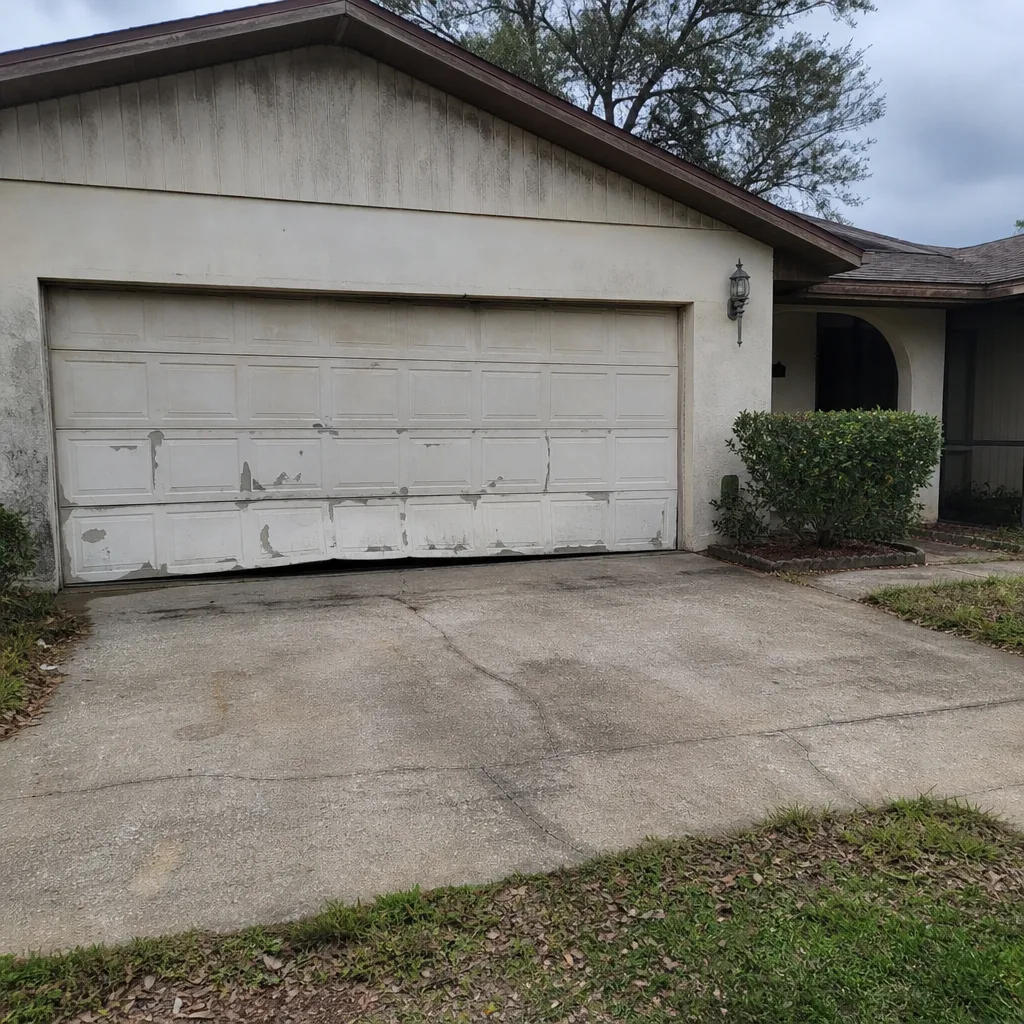 Before
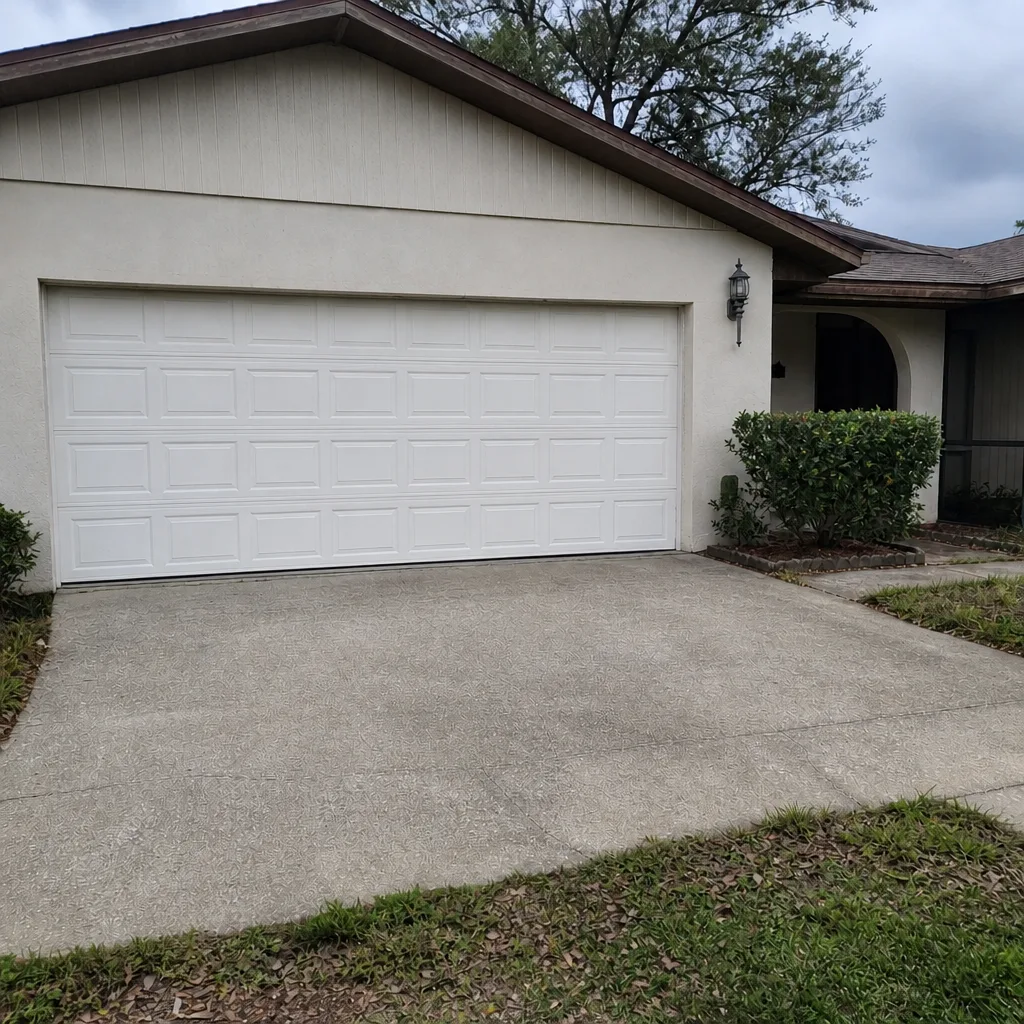 After
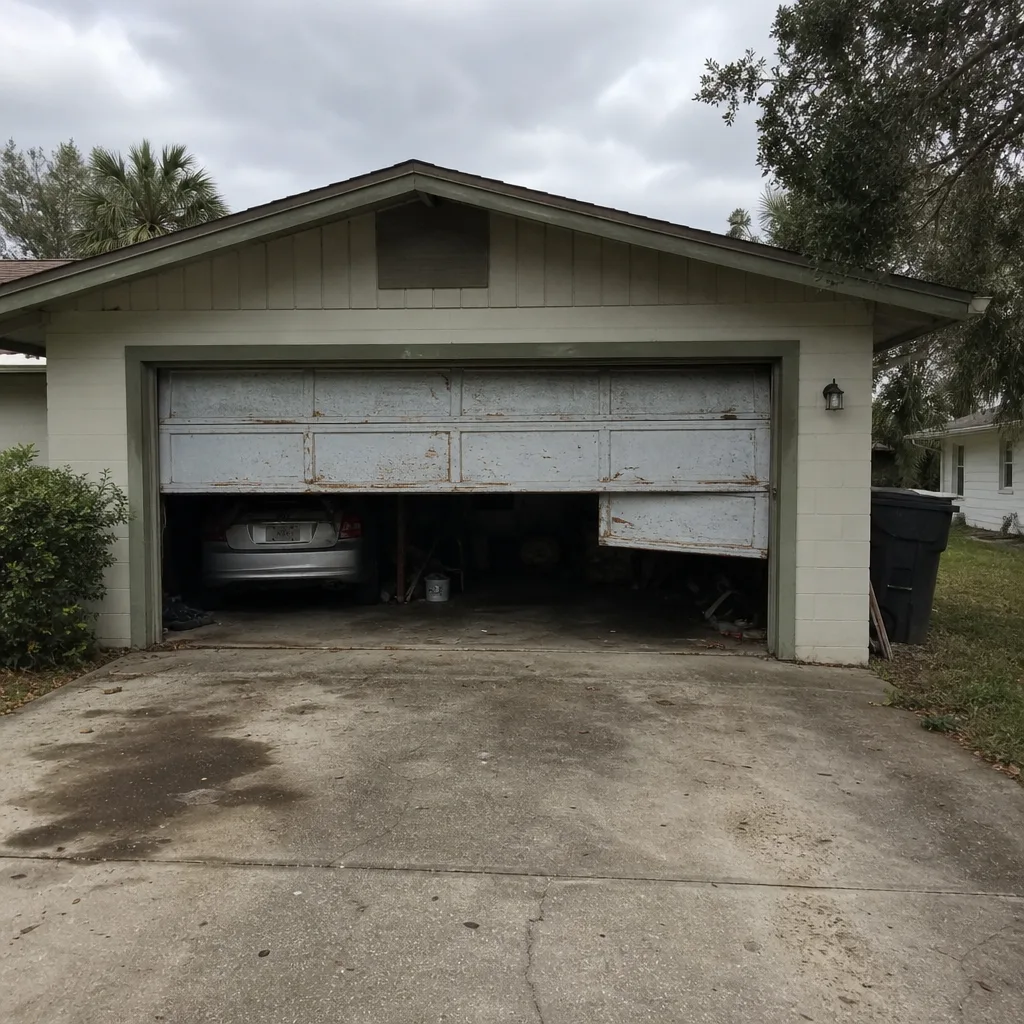 Before
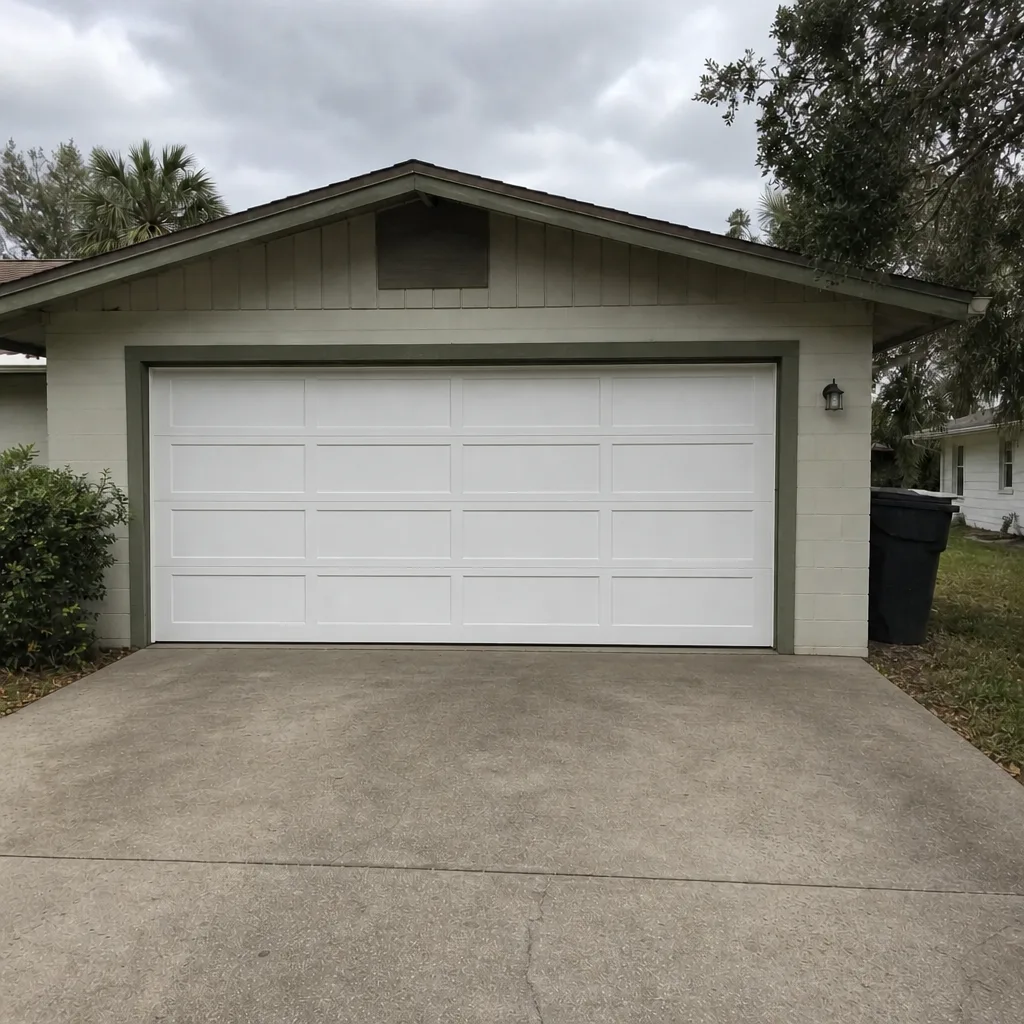 After
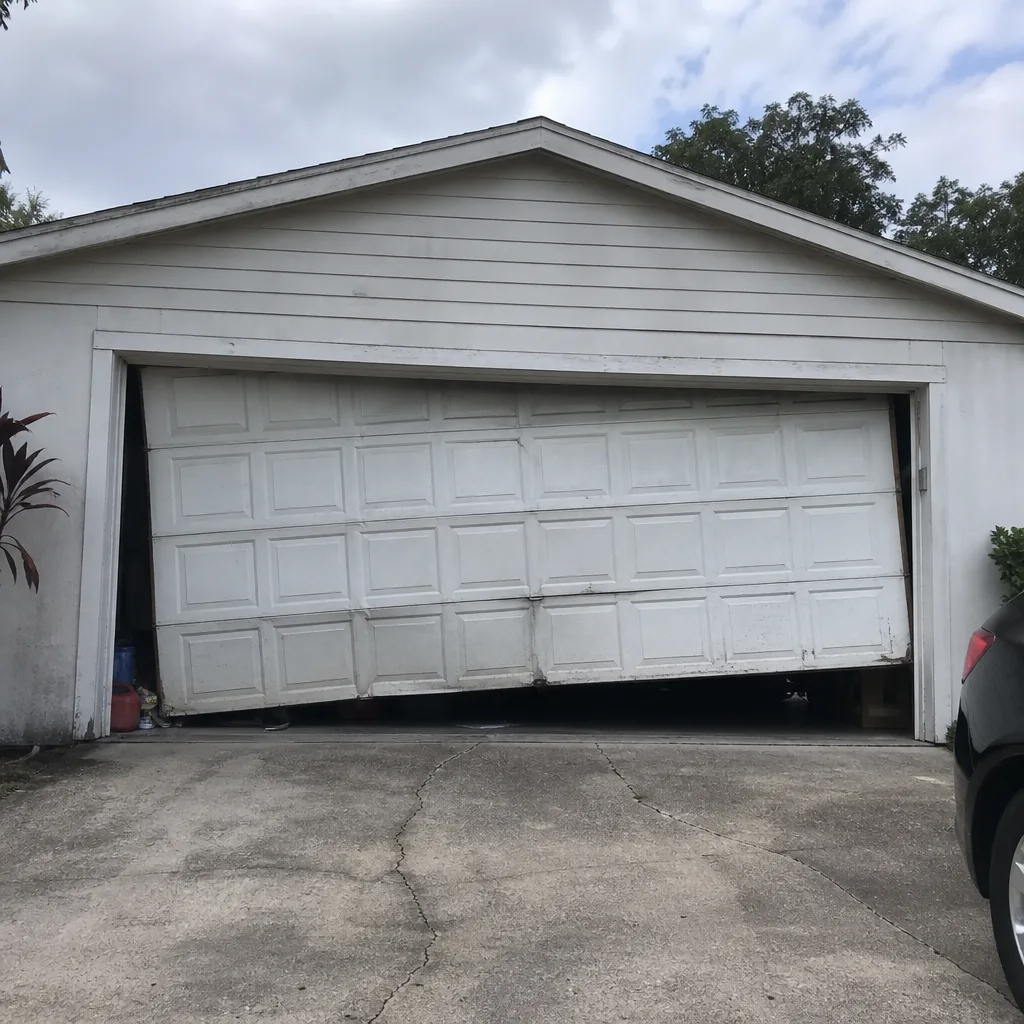 Before
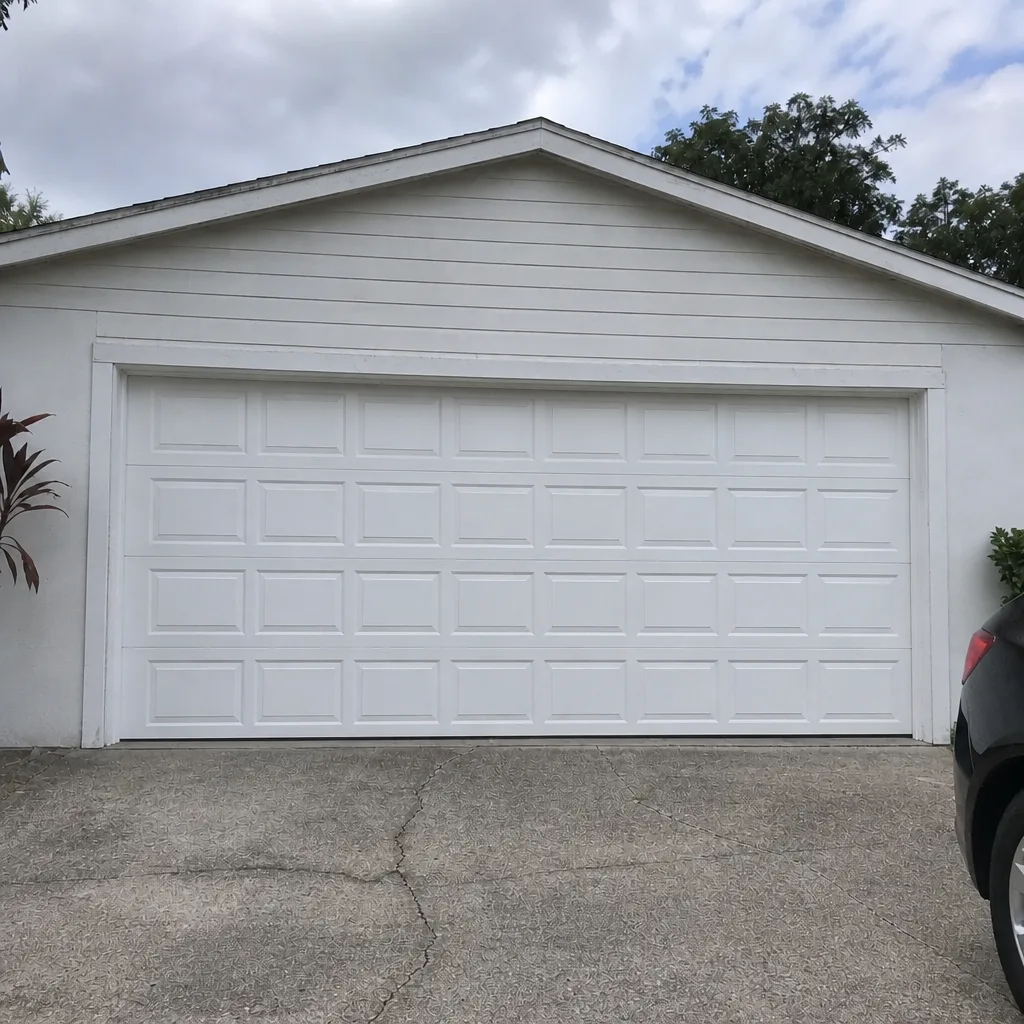 After
When to Call a Professional
Call immediately when a spring or cable has failed, when the door is off its tracks, when the door is stuck open and the house is unsecured, when the opener is running without moving the door, or when a door has been damaged by wind or impact. Call before touching the door when a spring has broken with the car inside and the door won’t move on its own. Call before the storm when the door isn’t rated and you want to know your options. Brandon Garage Door Repair Co offers free estimates in Brandon, and we’re reachable on the emergency line for the urgent cases. Call (855) 533-2795 and we’ll help you sort the situation into “safe to wait” or “handle today.”
Frequently Asked Questions
Make sure the door is fully closed, pull the emergency release cord straight down, and lift the door slowly with both hands. If it feels unusually heavy, stop and call for help. A manual open on a door with a failing spring can bring the door down, so the release sequence is the safe part, and the lift is the part to be careful with.
Stop using the opener, look for a second door if you have one, and call a technician before forcing the door up. In our experience, sometimes a closed-door spring break can be safely opened by hand with the right technique, and sometimes it can’t. A quick call sorts out which situation you’re in. Call (855) 533-2795 and describe what you’re seeing.
Wind-rated means the door assembly – the door, reinforcement struts, tracks, hinges, rollers, and anchors – was tested as a system to resist a given wind pressure. The door alone isn’t the rating; the installed system is. If you can’t find the rating label, a technician can identify the door by brand and profile and tell you what it’s rated to, or whether it needs reinforcement.
If the door is off its tracks, don’t force it. Put up a physical barrier, usually plywood screwed into the framing, to close the opening. Unplug the opener so nobody cycles it accidentally, photograph the damage before you move anything, and then schedule the repair. Plywood across the opening is the standard temporary fix and it’ll hold until the door is properly repaired.
Yes. We work on the brand you already have, not a substitute. We service LiftMaster, Chamberlain, Genie, Clopay, Amarr, Wayne Dalton, Craftsman, and Raynor, and that covers most of what’s installed in Brandon homes. If you’re not sure what brand is on your door, send a photo of the inside of the door and the opener label, and we’ll identify it before the visit.
Have the door brand, the opener brand and model, what specifically happened, what the door is doing right now, and whether the car is inside. A photo of the door and opener helps too. Those details are the difference between the right parts coming on the first visit and a second trip, and they let the technician advise you on interim safety before they arrive.
The Bottom Line
Garage door emergencies in Brandon come in two forms, and each has a pre-plan worth having in your head before you need it. For mechanical failures, the plan is the emergency release, a manual operation sequence, and a call before you force anything. For storm failures, the plan is knowing what your door is rated to, checking the reinforcement and anchors before the season, and having a temporary barrier option if the door fails. The rest is information: brand, model, what happened, what the door is doing now. Have that ready, and the emergency is a two-hour problem instead of a two-day one. If you’re reading this in advance, that’s the right time to call for a free estimate on any door that’s been acting up. Reach Brandon Garage Door Repair Co at (855) 533-2795 for a free estimate.
Written by the team at Brandon Garage Door Repair Co.