Last updated November 21, 2026
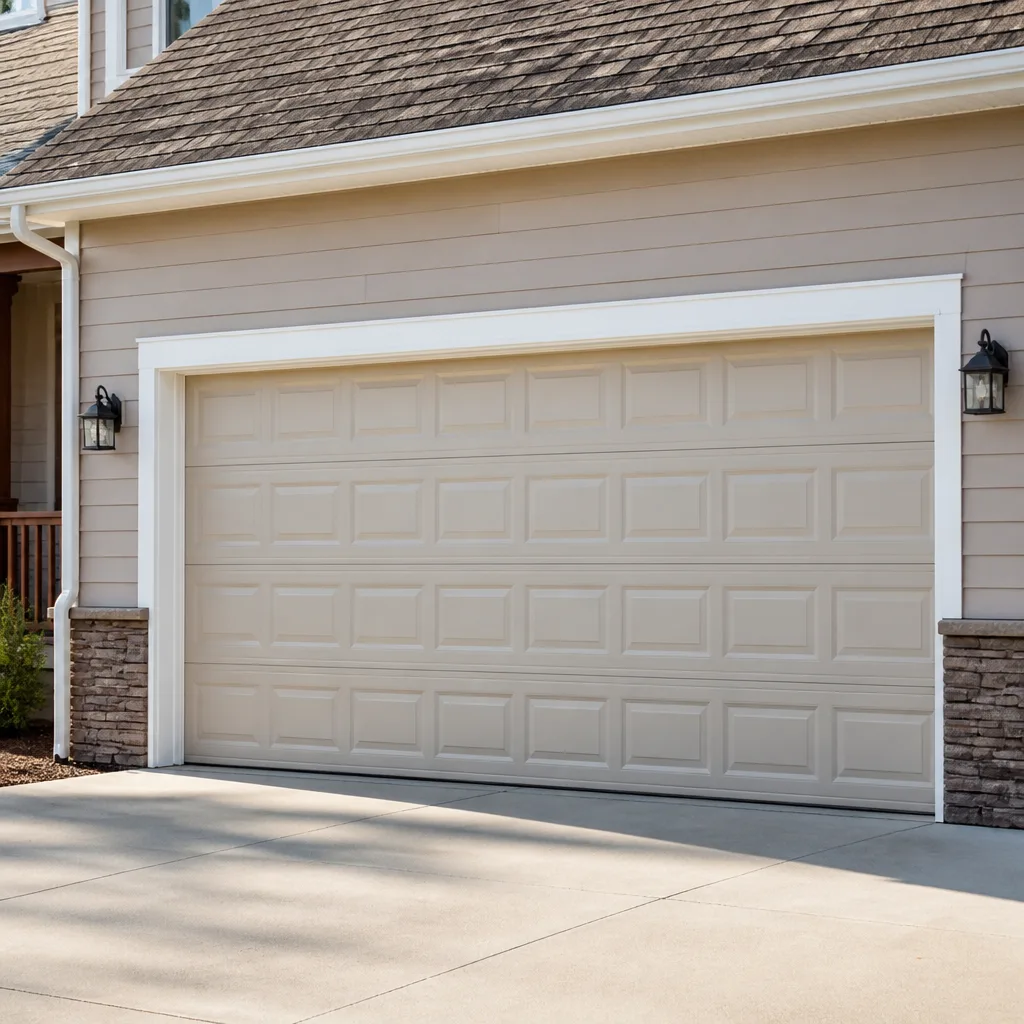 Raised-panel steel
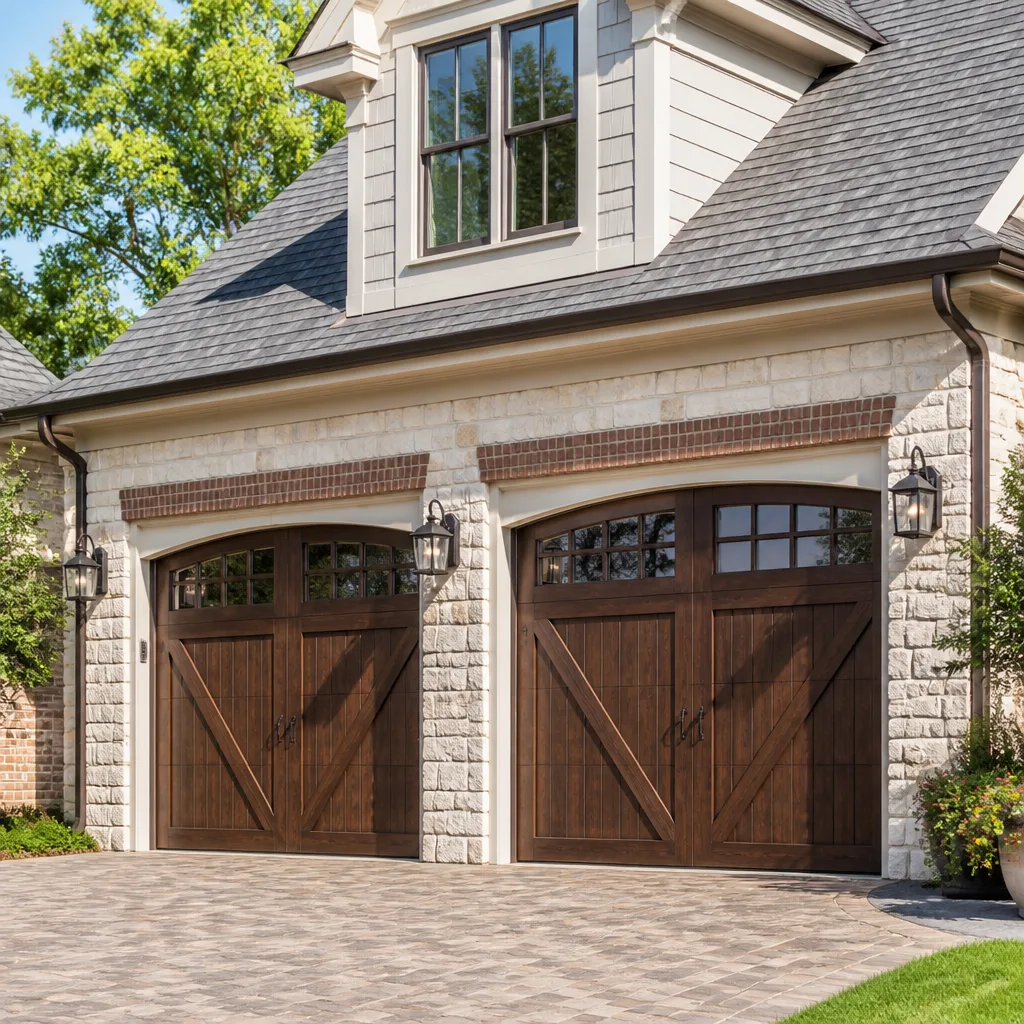 Carriage house
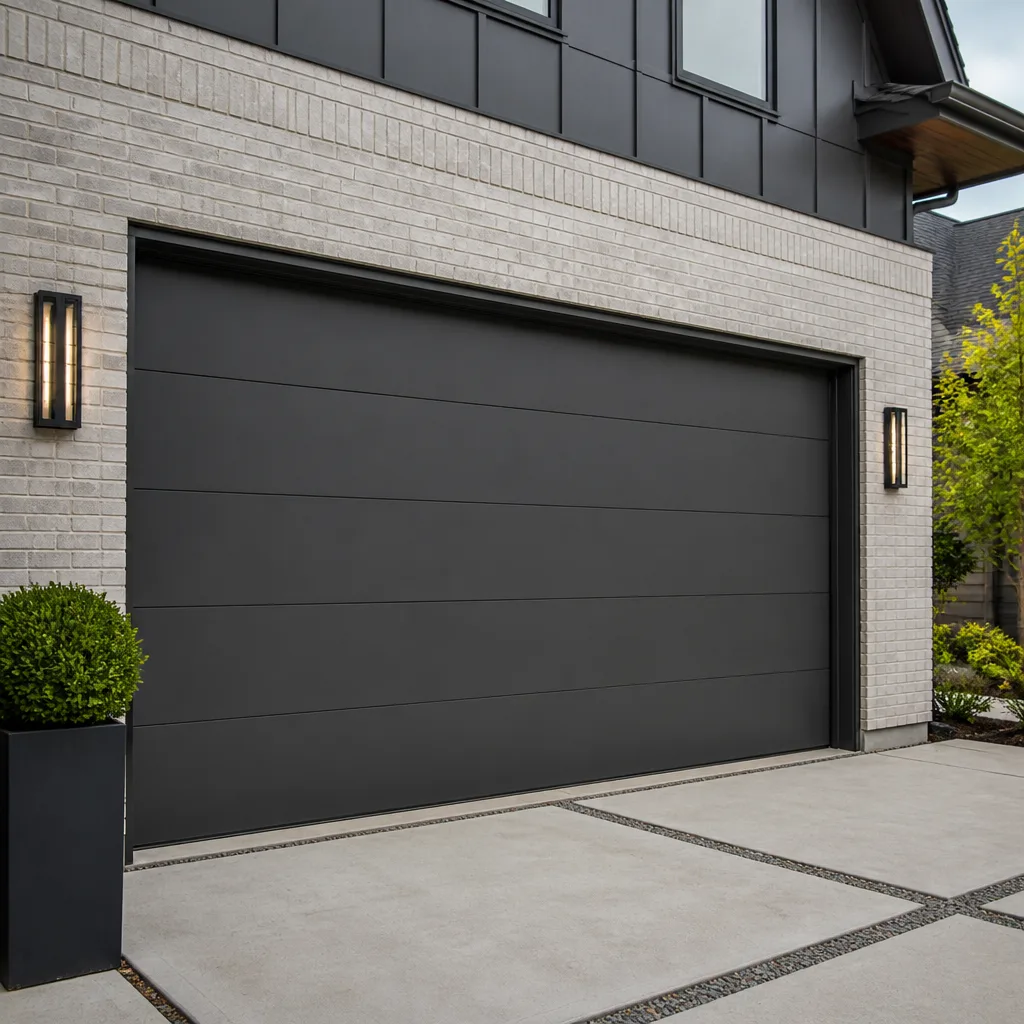 Modern flush
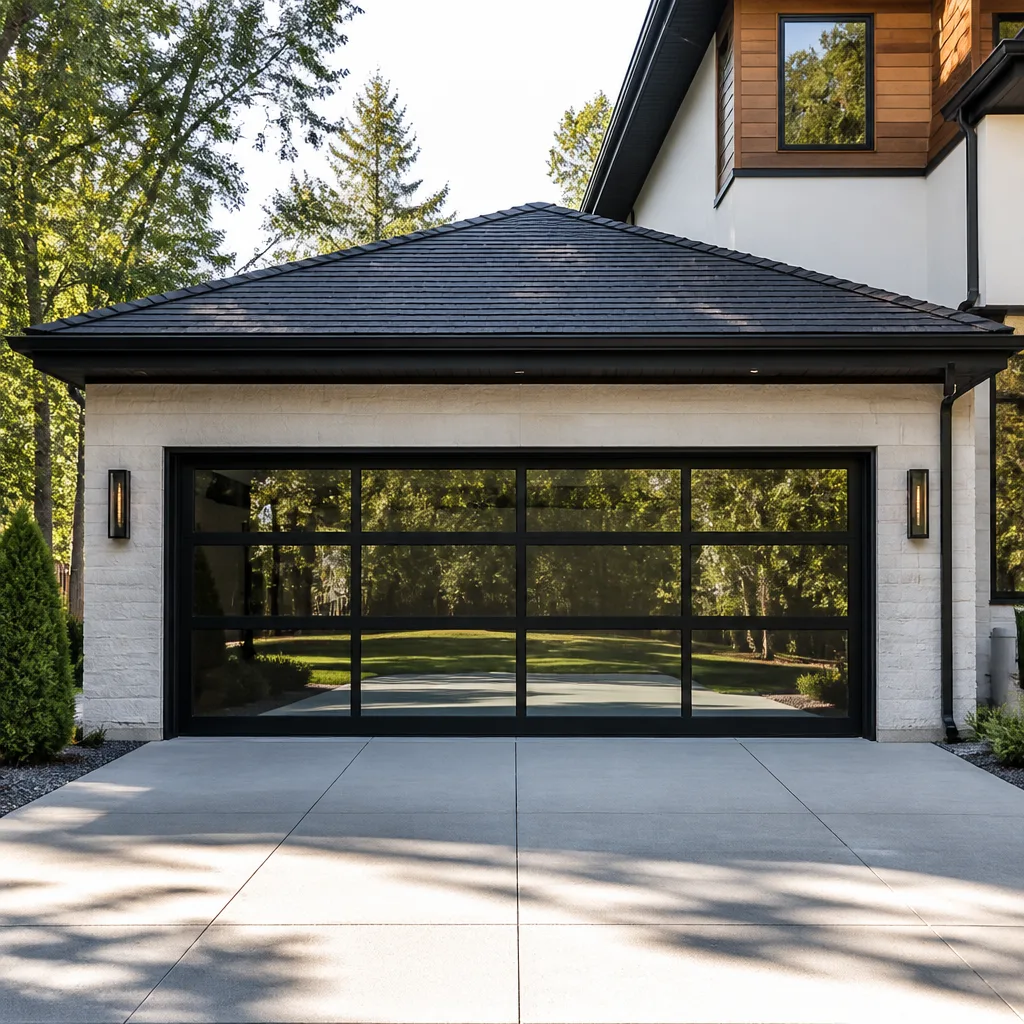 Full-view glass
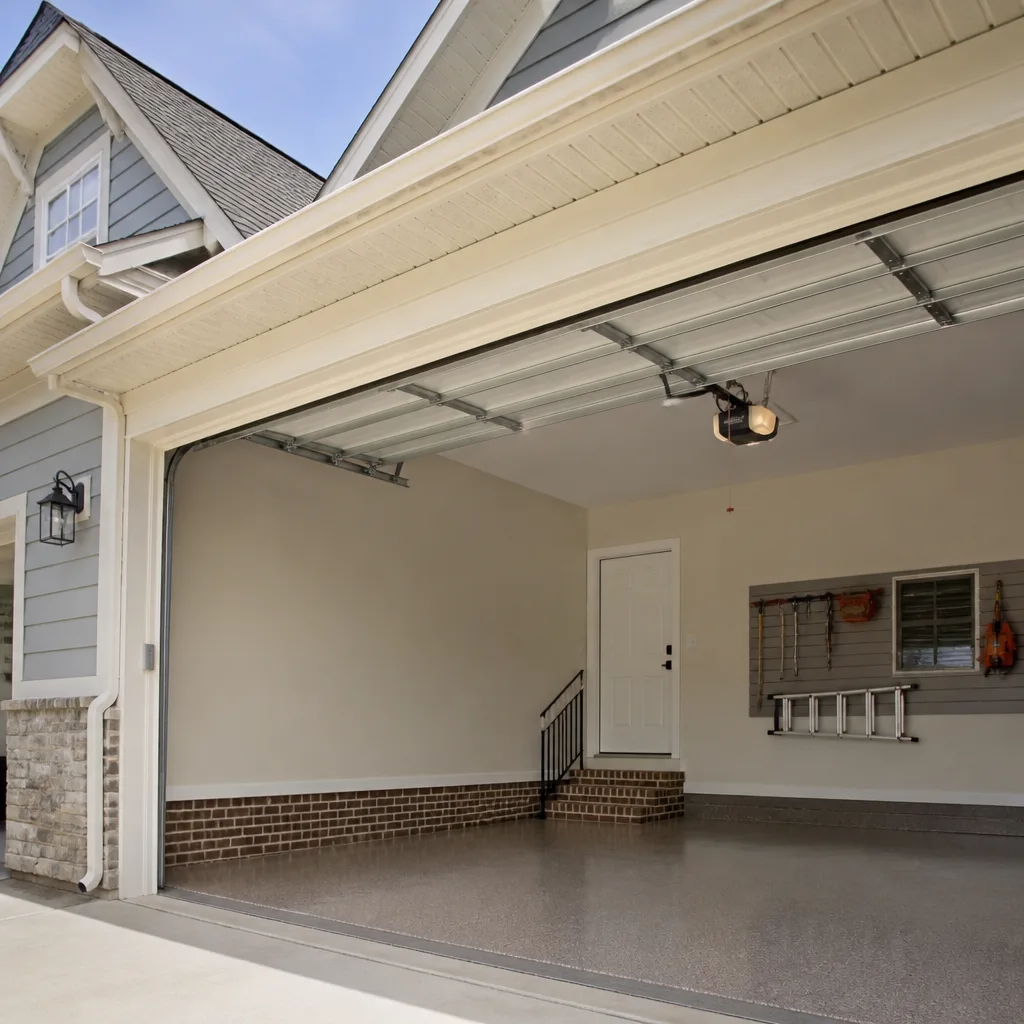 LiftMaster openers
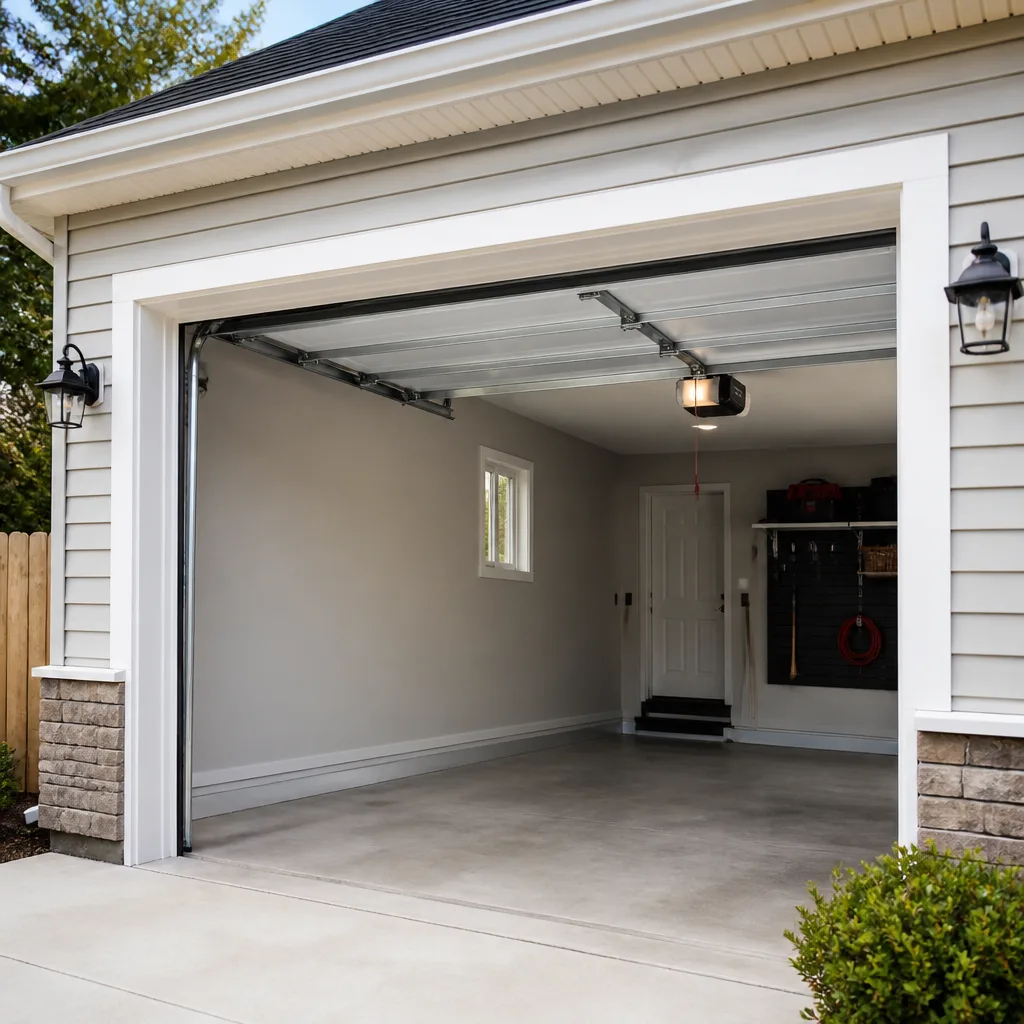 Chamberlain openers
Full 25-point door and opener safety check with every visit - springs, cables, rollers, tracks, and your LiftMaster or Chamberlain opener included
You get a price before we start. It does not change when the pro arrives.
Get your free estimateChoosing the Right Garage Door Brand: A Buyer’s Guide for Brandon
Most homeowners in Brandon start the garage door shopping process by asking which brand is best. That’s a reasonable instinct, but it’s the wrong first question. Brands have marketing campaigns. What actually determines whether your door survives a decade of Florida heat and whether a technician can get the right spring, panel or opener board next Tuesday is construction quality, finish durability, insulation math and parts supply. None of that shows up on a showroom label. In this guide we’ll walk through how to evaluate a door brand on the criteria that actually matter for a Brandon home, how the major opener brands differ, why model tier within a brand matters more than the brand itself, and how to match your choice to how your garage actually gets used. You’ll finish knowing what to ask before you sign a quote.
Quick Answer
The “best” garage door brand in Brandon is the one whose entry and mid-tier models use heavier steel gauge, a finish built for sustained humidity, insulation appropriate to Florida heat rather than cold-climate math, and a distributor network that can supply replacement panels and hardware without a multi-week wait. LiftMaster, Chamberlain, Genie, Clopay, Amarr, Wayne Dalton, Craftsman and Raynor all make models that pass that test and models that don’t. Judge the specific model, not the name on the box.
Styles & brands we work with
- Raised-panel steel
- Carriage house
- Modern flush
- Full-view glass
- LiftMaster openers
- Chamberlain openers
Table of Contents
- Why Brand Loyalty Means Less Than You Think in Garage Doors
- The Five Criteria That Actually Matter in Brandon
- Materials and Steel Gauge: What You’re Really Paying For
- Insulation R-Value: Florida Heat Math, Not Cold-Climate Math
- Opener Brands Compared: LiftMaster, Chamberlain, Genie and Craftsman
- Model Tier Within a Brand: The Same Logo Can Hide Two Very Different Doors
- Parts Availability and Distributor Networks in the Tampa Bay Area
- Matching Brand Choice to Your Actual Use Case
Why Brand Loyalty Means Less Than You Think in Garage Doors
A garage door is not a single product. It’s a system: panels, springs, cables, rollers, hinges, tracks and an opener. Those components are frequently made by different companies and assembled under one brand name. A door panel may carry a well-known label while the torsion spring inside was wound by a third-party supplier. The opener may share internal components with three competing labels. This is standard in the industry, and it’s the first reason brand loyalty breaks down at the point of repair.
What that means practically is that a brand name tells you less about future serviceability than homeowners expect. When a spring fails, the technician sources a spring that matches your door’s weight, cycle rating and drum geometry. Wire diameter, inside diameter and overall length matter far more than the logo on the panel above it. When an opener board fails, the replacement has to match the unit’s model number and vintage, which is a parts-chain question, not a brand-loyalty question.
In our experience across Brandon, the homes that get the longest life out of their doors are usually not the ones that bought the most heavily advertised brand. They’re the ones that bought a mid-tier model from a manufacturer with deep distribution, kept up with lubrication and balance, and had a qualified technician service the springs before they snapped. That’s the pattern worth shopping for.
So the practical rule is this: shoppers trying to find the best garage door brand in Brandon FL should treat brand as a starting filter, not a finish line. Use it to narrow the field to manufacturers with real local distribution and consistent model documentation. Then compare the specific model on the criteria below.
The Five Criteria That Actually Matter in Brandon
Once you drop brand-first thinking, five criteria do most of the work. Each one is answerable with a question you can ask a sales rep or an installer directly, and each one maps to a specific failure mode that shows up in Brandon homes.
- Steel gauge and panel construction. Ask for the gauge of the steel skin and whether the panel is a single-layer, sandwich or full-insulated build. Thinner steel and single-layer panels dent, oil-can and sag before their time.
- Finish quality and corrosion resistance. Brandon’s humidity cycling stresses finishes constantly. Ask what prep and coating the manufacturer specifies and whether the finish is warranted against rust-through.
- Insulation R-value and door weight. Insulation helps with heat gain into an attached garage, but heavier insulated doors also need stiffer springs and a stronger opener. Balance the benefit against the hardware it demands.
- Parts supply chain. Ask the installer how quickly they can order a matching replacement section and who stocks that brand’s springs and hinges in the Tampa Bay area.
- Opener compatibility and control electronics. If you’re keeping your existing opener, confirm the new door’s weight is within its lift capacity and that safety sensors and travel limits can be reset to the new door profile.
Score each prospective door on all five before you compare price. A door that wins on price but loses on parts availability will cost more over its life. That’s the part of the math showroom visits never show you.
Materials and Steel Gauge: What You’re Really Paying For
Steel gauge is a measure of thickness, and in garage doors lower gauge numbers mean thicker steel. The difference between two adjacent gauges sounds small and feels substantial once you’re lifting a section or watching one take a hit from a bicycle handlebar. Thicker steel resists denting, holds its shape across a wide panel, and stays flatter along the seams where moisture collects.
Construction style matters just as much. A single-layer steel door is one stamped skin with no backing. A sandwich door adds insulation between two skins. A full-insulated door adds a frame and can include thermal breaks. In Brandon’s humidity, the practical consequence is condensation and panel corrosion. A single-layer door runs colder on the inside face during air-conditioned evenings and warmer during the day, which encourages moisture to collect along the seams and bottom edge. A two-skin door behaves more predictably and tends to hold its finish longer.
Finish prep is where budget doors quietly cut corners. A proper factory finish involves cleaning, a conversion coating and a baked-on topcoat. Under-built finishes look fine on day one and begin to chalk, peel or rust along the panel edges after a few seasons of humidity cycling.
Hardware is the third leg. Rollers, hinges and springs are often sourced from third-party suppliers regardless of brand, so judge them directly rather than assuming the door’s label guarantees them. Nylon rollers, for example, run quieter and wear better than cheap steel rollers on the same door.
When you’re comparing two doors, ask for the steel gauge, panel construction and finish spec in writing. Then compare those three lines directly. That’s a far more useful conversation than debating which logo is stamped on the outside, and it’s where the actual value in a new door lives. When the door arrives and the hardware needs sorting out, that’s a job for garage door repair, not a full replacement.
Insulation R-Value: Florida Heat Math, Not Cold-Climate Math
Most insulation guidance for garage doors was written for cold climates, where the goal is keeping heat inside the house from leaking out through the garage. In Brandon the problem is inverted. The garage gets hot during the day, and the door is the largest single surface separating that heat from an attached living space. Insulation still helps, but it works against heat gain and humidity rather than heat loss.
That changes the math in three ways:
- The benefit is comfort and heat-gain control, not heating-bill savings. Insulated doors help keep the garage and any adjacent room cooler and drier.
- Heavier doors demand stiffer springs. A fully insulated double door can be substantially heavier than an uninsulated one, and the springs, cables and opener all have to be sized to that weight. Under-sized springs on an insulated door wear out faster.
- R-value isn’t a single number for a whole system. Panel R-value, perimeter seals, bottom weatherstrip and the door’s fit all affect performance. A high-R panel on a poorly sealed opening underperforms a mid-R door that actually seals.
For attached garages in Brandon, a mid-range insulated door is usually the sweet spot: enough thermal control to matter for comfort, without the weight and hardware demands of the heaviest builds. Detached garages and occasional-use second bays can often run uninsulated without a practical comfort penalty. Match the insulation level to how the space is used, not to the marketing tier the manufacturer puts on top.
Opener Brands Compared: LiftMaster, Chamberlain, Genie and Craftsman
Opener brands get discussed as if they’re competing religions, but in practice they differ in three concrete areas: reliability architecture, smart-home integration and how easy it is to service them with available local parts. Understanding those differences, and matching them to how you actually use the door, matters more than a loyalty pledge.
LiftMaster is a professional-channel brand, which means its units are typically sold through installers rather than shelf retail. That density matters at repair time. The units share a lot of internal architecture with Chamberlain, which is the consumer-retail-facing sibling brand. If your door has a Chamberlain unit, the same family of parts and accessories often applies, but always confirm against the exact model and vintage. Both brands offer modern connected controls and battery-backup options on higher tiers, and both have good service documentation.
Genie is another widely distributed brand with a long consumer install base. Its strengths tend to sit in quiet belt-drive configurations and straightforward residential builds. Craftsman is the retail name many Brandon homes already have bolted to the ceiling. Its units are common, straightforward to diagnose, and well-documented, though some discontinued models can require substitutions on control boards.
Three things to weigh before you decide:
- How is the door used? A heavy daily-use door benefits from a stronger, quieter drive with solid duty ratings. An occasional-use second garage doesn’t need a top-tier unit.
- Do you want connected controls? Modern openers across all four brands offer app-based monitoring and integration with common smart-home ecosystems. Ask which integration matters to you before you compare specs.
- Can the unit be serviced locally? A niche opener with poor parts distribution can turn a routine repair into a wait. Choose a brand a technician can source parts for without ordering from across the country.
Once an opener is installed, the repair side is often routine. If a belt, board or safety sensor starts acting up, that’s a straightforward garage door opener repair call rather than a replacement decision, and it’s worth diagnosing before shopping for a new unit.
Model Tier Within a Brand: The Same Logo Can Hide Two Very Different Doors
The single most useful idea in this guide is that a brand is not a quality level. Almost every major manufacturer in this industry produces a value line, a mid line and a premium line under the same name. Panels, steel gauge, insulation, finish prep and hardware change dramatically between tiers, and a trained eye can spot it in seconds even though the logo matches.
That means a “which brand is best” debate is often really a “which tier is this specific door” question in disguise. Two doors from the same manufacturer can differ by more than two doors from different manufacturers. When you’re comparing quotes, compare the tier documentation, not the marketing hero shot.
Here’s what tier differences show up as in practice:
- Value tier: single-layer steel, thinner gauge, basic finish, standard steel rollers, plus-sized gaps between panel seams. Cheaper to buy; quicker to wear.
- Mid tier: two-skin or lightly insulated construction, better finish prep, nylon rollers, more consistent panel seams. The usual sweet spot for most homes.
- Premium tier: full-insulated construction, thicker steel, factory-finish multi-coat systems, upgraded hardware, and often stiffer engineered springs.
When a quote arrives, ask which tier is specified and get the model number in writing. If two quotes come in close on price but one is a value-tier door and the other is mid-tier, the cheaper quote isn’t cheaper. It’s a different product. This is the kind of thing worth verifying before the order is placed, because once the door is on the wall the tier conversation is closed. Our team works on the brand you already have and will tell you plainly whether the model you’re considering is the tier that matches your plan.
None of these tiers is a scam. A value-tier door on a rental property or a seldom-used third bay can be a smart purchase. The mistake is paying value-tier money for what should be a mid-tier door, or buying premium tier for a bay that opens twice a week.
Parts Availability and Distributor Networks in the Tampa Bay Area
Here’s where local reality bites hardest. A door brand can score well on every construction criterion and still be a poor purchase in Brandon if replacement sections or hardware take weeks to arrive. The question worth asking before you buy is not “does this brand have a national reputation” but “does this brand have a distributor in the Tampa Bay area who carries the sections, springs and hardware I’ll need.”
Brands with deep professional-channel distribution tend to have the strongest local supply chains. LiftMaster and Chamberlain sit in that camp thanks to installer-facing distribution. Clopay and Amarr, both long-established door manufacturers, generally have broad dealer nets that keep replacement sections and matched panels within reach in the Tampa area. Wayne Dalton and Raynor are established brands with professional distribution, though specific sections and colors can vary in availability by region, so it’s worth confirming the exact model’s supply path before ordering. Craftsman’s consumer install base is large enough that many common repair parts are accessible, though discontinued models can require substitutions.
The practical checklist:
- Ask who stocks this brand locally. If the answer is vague, that’s a signal.
- Ask about replacement sections specifically. Panels get damaged in ways springs don’t, and matched sections matter for appearance.
- Ask about spring and hinge sourcing. Springs aren’t brand-specific in the way panel logos are, so what matters is that the technician can size the spring to your exact door weight.
- Confirm the color batch. Even within a brand, color batching across manufactures can drift subtly between production runs.
If your existing door is mid-life and the question is repair versus replace, our guide on garage door repair walks through the diagnostics that usually decide it. Springs, in particular, are one part of the system worth treating with real care. They’re wound at high tension, they fail suddenly, and they’re the part of a garage door most likely to seriously injure a homeowner attempting a DIY fix. We specialize in garage door spring repair for exactly that reason: matching the spring to the door’s weight and geometry, at the right cycle rating, is the difference between a repair that lasts and one that fails again.
Matching Brand Choice to Your Actual Use Case
The last filter is the one homeowners skip most often: how the door actually gets used. A brand-tier choice that makes sense for a family of five coming and going all day may be overkill for a boat storage bay opened twice a week. Three common cases cover most Brandon homes.
Heavy daily-use household
The main door on a busy family home opens and closes several times a day, every day. Prioritize a mid-tier to premium door with thicker steel, a well-prepped finish and hardware rated for more cycles. Pair it with an opener from a brand with strong local service support, ideally with quieter drive and battery-backup options if your household depends on the door for daily access. Springs should be sized generously and serviced before failure rather than after.
Occasional-use second garage or storage bay
A second bay used for storage, a boat, or a workshop doesn’t need a premium door. A value-tier or uninsulated mid-tier door is usually the right call, matched to an opener with appropriate duty rating rather than top-tier specs. The savings here go into keeping the primary door well maintained. That’s the more valuable spend.
HOA with strict aesthetic requirements
HOAs frequently specify color palettes, panel styles and sometimes glazing or window patterns. Brand flexibility matters more here than brand loyalty, because the door has to match the community’s approved spec first and the construction criteria second. Before you buy, ask the HOA for the approved door spec and confirm the manufacturer can supply a matching model. Brands with broad dealer nets and stable production runs tend to be easier to satisfy HOA requirements with, and easier to replace a single damaged section for years after the other units were installed.
In all three cases the honest answer is the same: brand is the entry filter, use case is the tiebreaker, and the model-tier documentation is the deciding evidence. Our team at Brandon Garage Door Repair Co works on whatever brand is already on your door, from a single broken spring to a full new door, so the brand-versus-tier conversation happens before the order, not after.
Common Mistakes to Avoid
- Buying on brand name alone. The same logo sits on a value-tier door and a premium one. If you don’t compare tier, you can pay premium money for a value door. Ask for the model number in writing.
- Assuming insulated always means better. Insulation helps an attached garage in Brandon’s heat, but it also adds weight that demands stiffer springs and a stronger opener. Match insulation level to how the bay gets used.
- Ignoring parts supply before ordering. If a replacement section can’t be sourced locally, a straightforward body repair can turn into a long wait. Confirm the brand has a real Tampa Bay distribution path before signing.
- Sizing springs after the door is up. Springs must be matched to door weight and cycle rating. Under-sized springs wear out faster and are the most dangerous part of the system to service incorrectly.
- Skipping the opener’s door-weight check. If you’re keeping your existing opener on a new, heavier door, confirm the weight is within its lift capacity before install. An under-spec opener strains and fails sooner.
- Buying a color without checking color batching. Panels manufactured in different batches can drift subtly in tone. If you’re replacing a section or adding a second door to a finished home, confirm the match.
- Treating HOA approval as a formality. In Brandon communities with a spec, the door has to match the approved color and panel pattern. Get that spec in writing before the order goes in.
See the difference
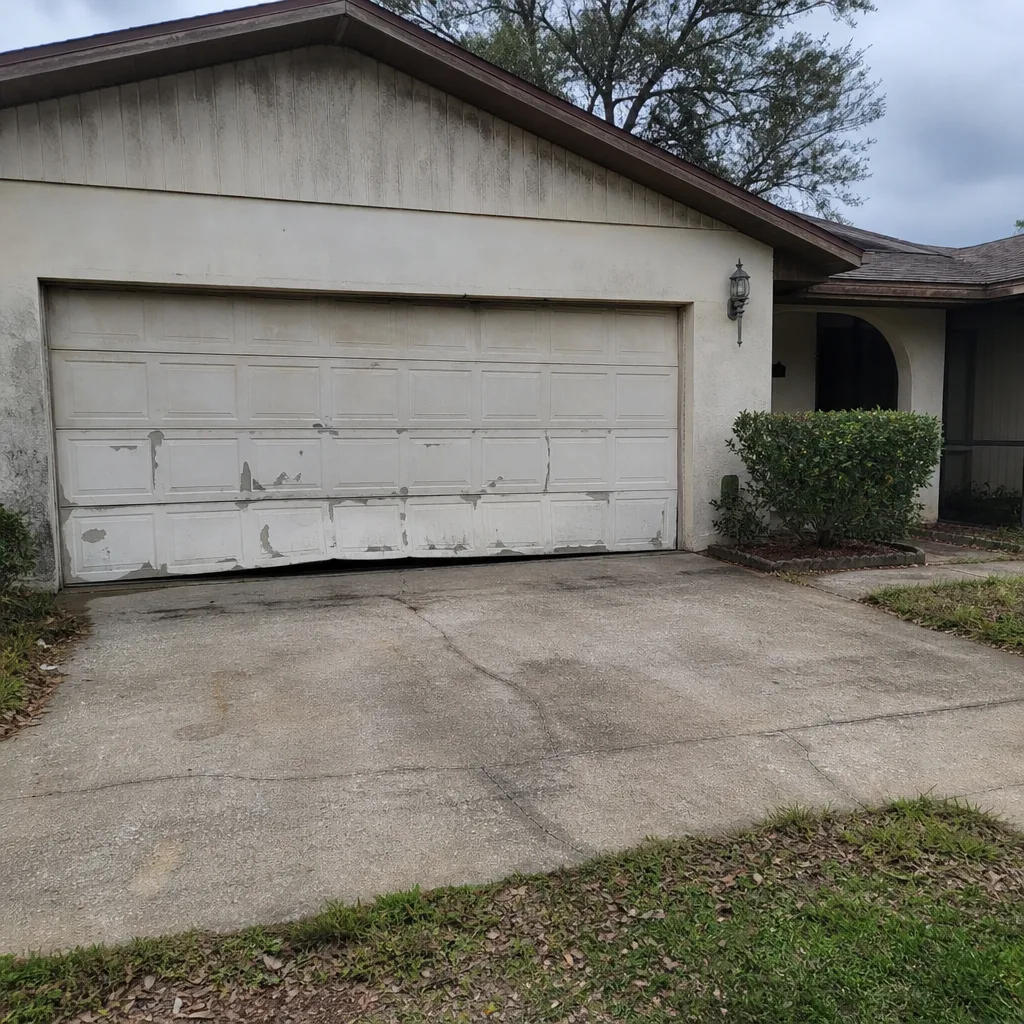 Before
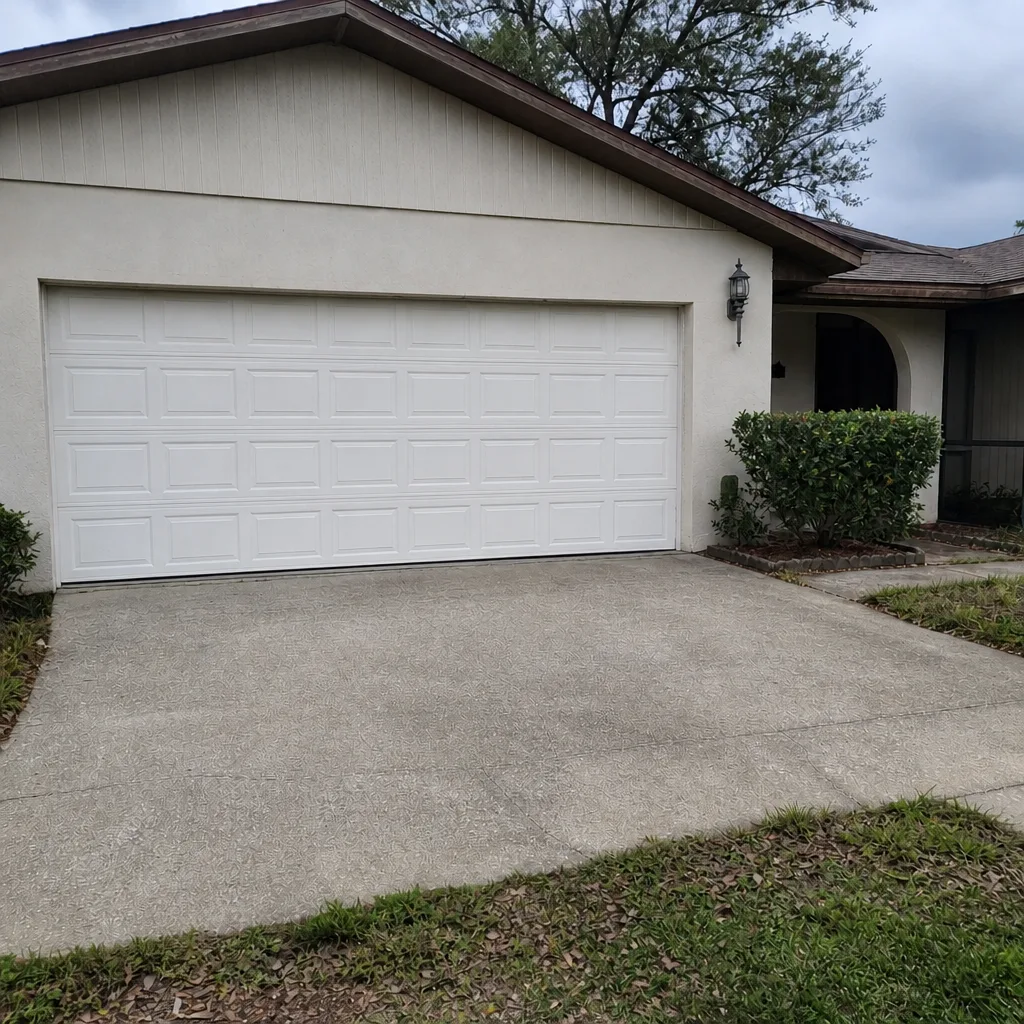 After
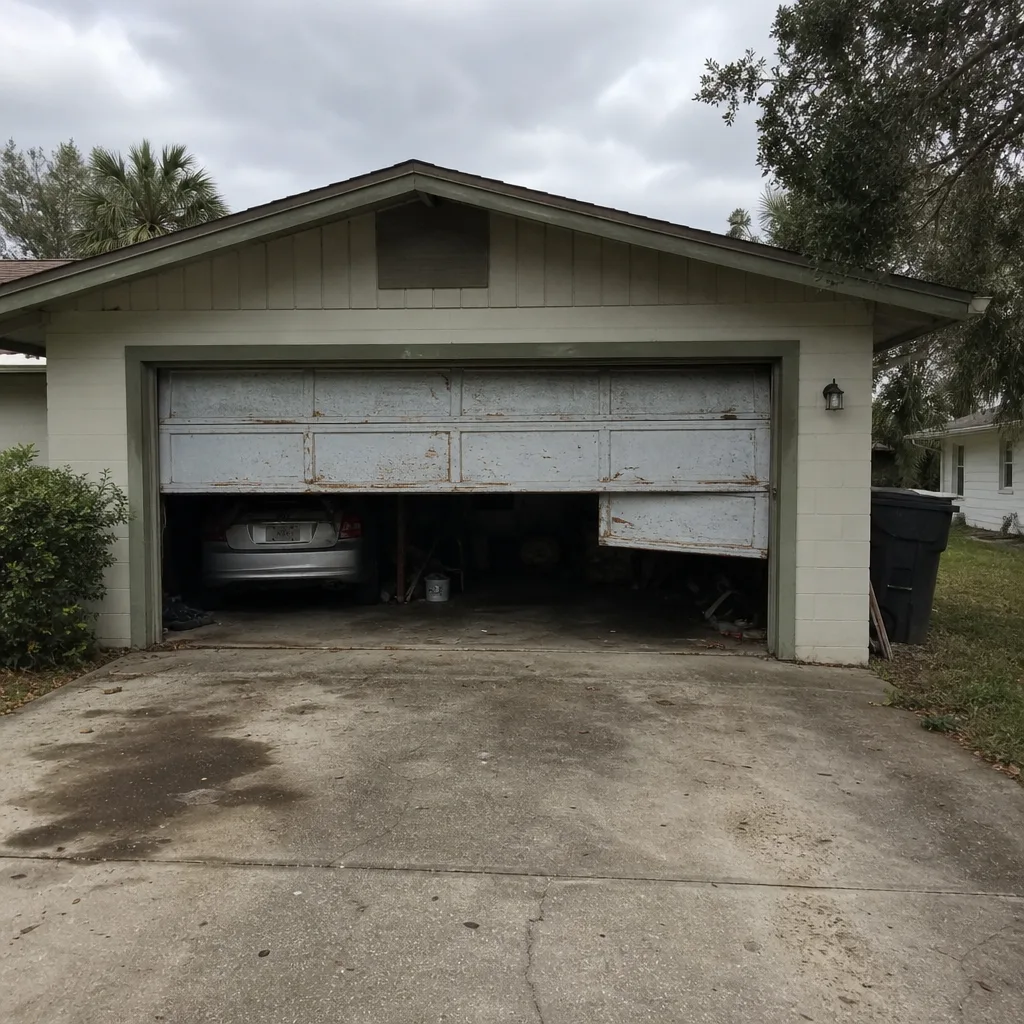 Before
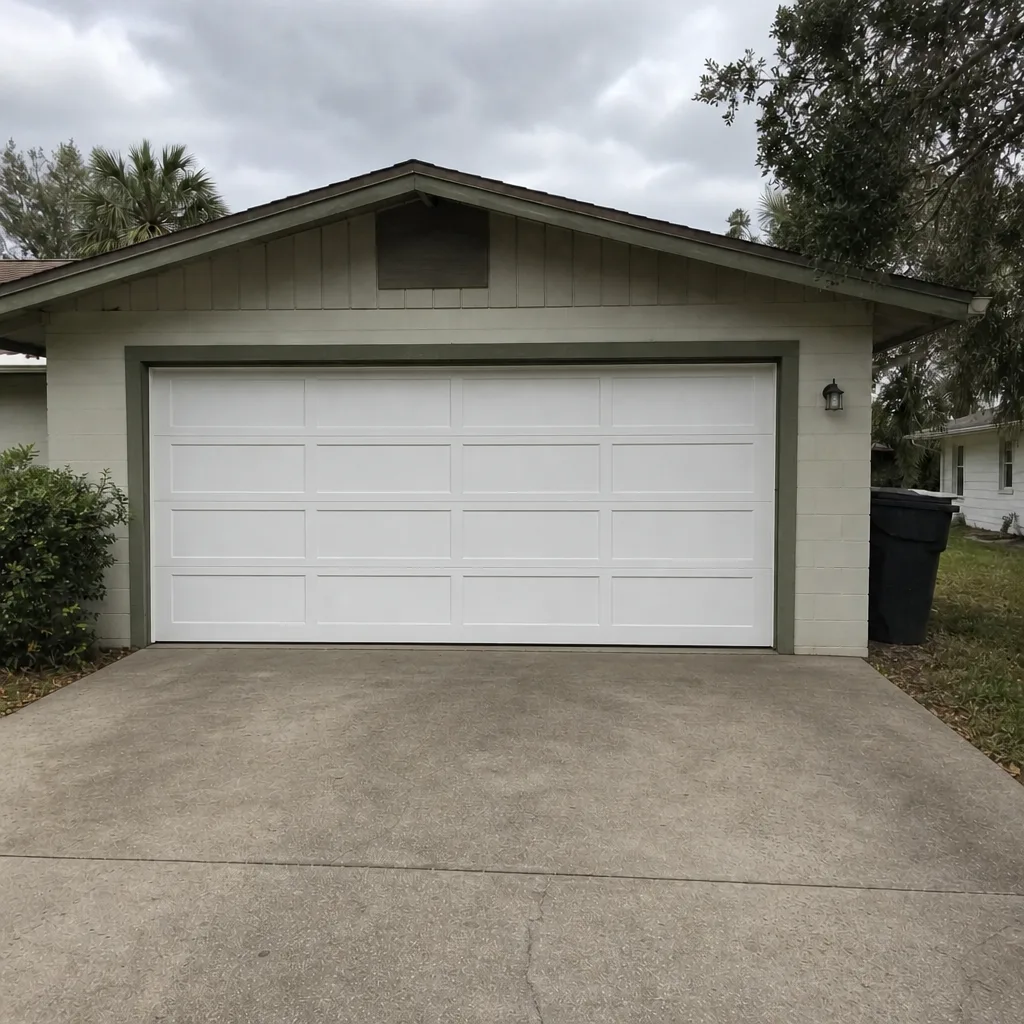 After
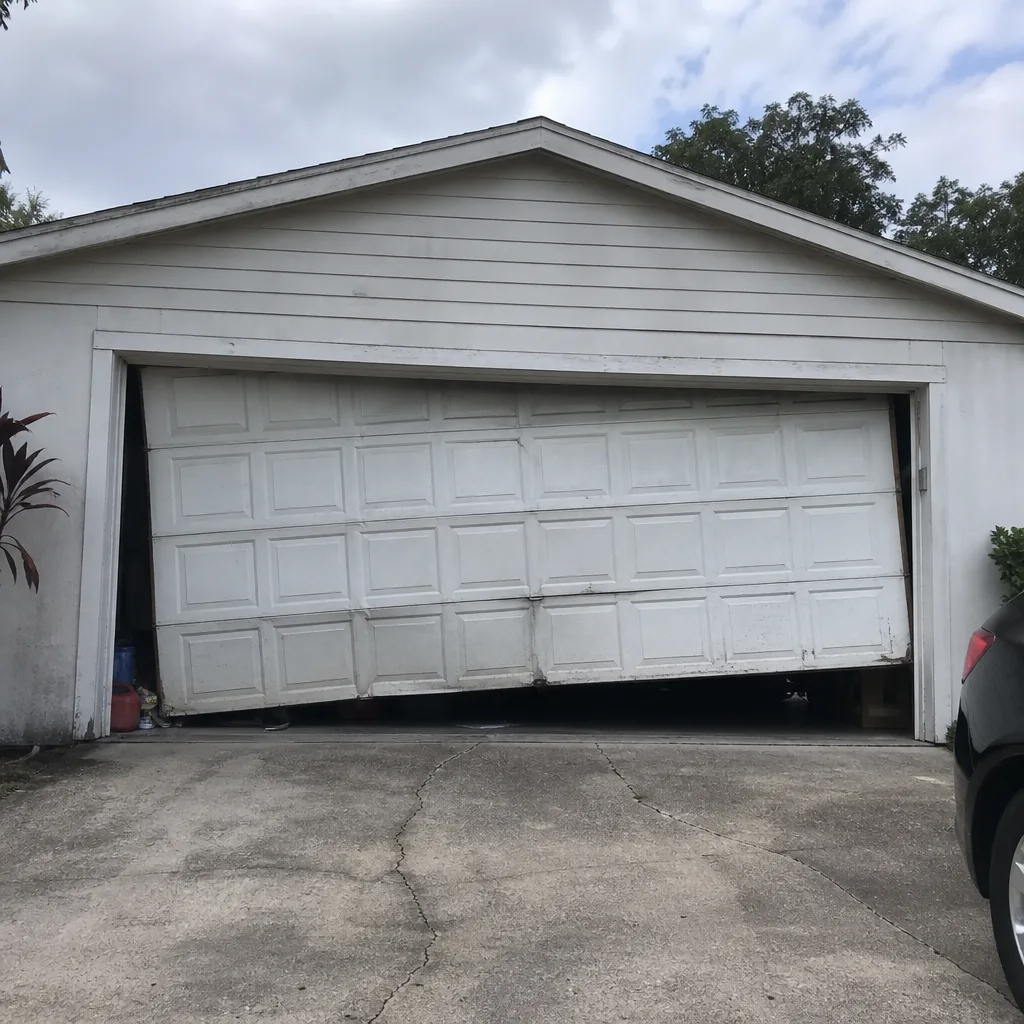 Before
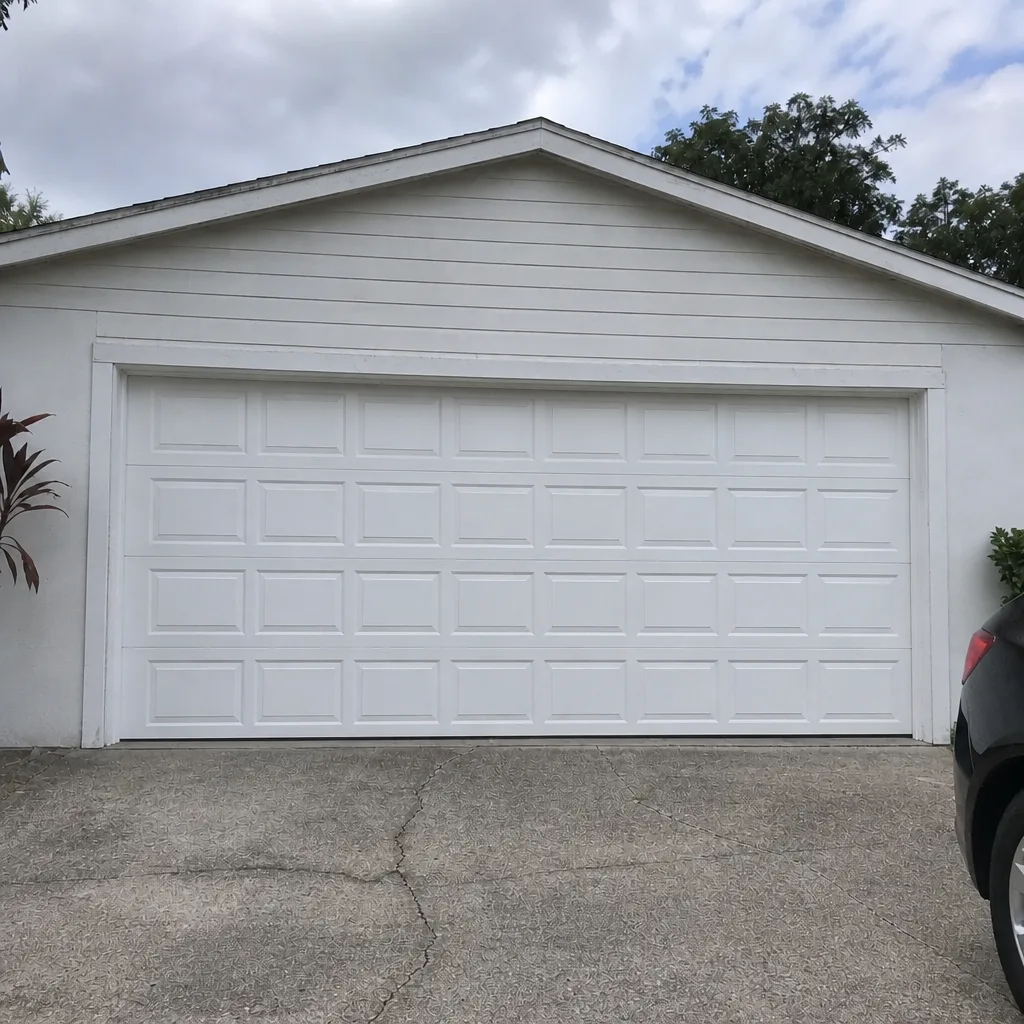 After
When to Call a Professional
Some decisions are worth a phone call rather than a browser. If your door is stuck open, your springs have snapped, your opener won’t lift the door or your panel has been damaged by a vehicle nudge, those are repair decisions, not shopping decisions, and the door needs to be back up safely today. If you’re choosing between repair and replacement on a mid-life door, a professional diagnosis is the difference between spending on the wrong fix and spending on the right one. If you’re buying a new door, a professional measure is what makes the tier and brand comparison actually mean something, because the wrong size or wrong spring spec undoes every other choice. Brandon Garage Door Repair Co offers free estimates in Brandon and covers repair, opener repair, spring repair, full installation and emergency service for the brand you already have. Our technicians have up to 14 years of experience and work on LiftMaster, Chamberlain, Genie, Clopay, Amarr, Wayne Dalton, Craftsman and Raynor equipment. Call (855) 533-2795 for a free estimate and a written price before any work starts.
Frequently Asked Questions
No. Torsion springs are matched to your door’s weight, drum geometry and cycle rating rather than to the manufacturer’s logo. What matters is that the spring is sized correctly for your specific door, and matched in pairs when both are being replaced. Our technicians size springs to the actual door in front of them, regardless of the door’s brand.
Yes, in most cases. The opener is a separate system from the door itself, and a new unit can be fitted to an existing door provided the door is balanced and its weight is within the new opener’s lift capacity. The wall-mounted control wiring and safety sensors may need to be re-fitted or replaced with the new unit’s components. Call (855) 533-2795 to talk through compatibility before you buy.
Compare steel gauge, panel construction (single-layer, sandwich or full-insulated), finish spec and the model number on each quote. If both quotes name the brand but neither names the model, you can’t compare them. Ask both installers for the exact model number and tier in writing, then compare line by line.
Construction, finish prep and hardware. Value-tier doors typically use thinner steel, a single-layer panel and basic hardware, while premium doors use thicker steel, full insulation and better factory finishes. The practical difference in Brandon’s humidity is how well the finish and panel seams hold up over years, and how much the door weighs once insulated.
For an attached garage, usually yes, though the benefit is comfort and heat-gain control rather than cold-climate energy savings. Insulation helps keep the garage and adjacent rooms cooler and drier. The tradeoff is added weight, which demands properly sized springs and an opener rated for the door’s lift weight.
Give us a call. Emergency garage door service is a genuine offering here, covering stuck-open doors, broken springs and failed openers when your garage can’t be left insecure. We’re closed on Saturdays, so a Saturday failure gets booked for Sunday. Call (855) 533-2795 and we’ll get you scheduled.
The Bottom Line
Brand loyalty is a weak filter in garage doors. The stronger filters are steel gauge, panel construction, finish quality, insulation matched to Florida heat, and whether a technician can source the parts for your model without a long wait. Within any of the major brands that matter in Brandon, value-tier and premium-tier models coexist under the same logo, so the model number on the quote is the only real evidence of what you’re buying. Match the tier to how your garage actually gets used: heavy daily household, occasional second bay, or HOA-restricted spec. Get the measure and the model number in writing before the order, and confirm the parts path first. That’s the path that ends with a door that holds up quietly for years.
If you’d rather skip the guesswork and get a straight answer on the door you already have, or the one you’re about to buy, Brandon Garage Door Repair Co is ready to help. From a single broken spring to a full new door, we work on the brand you already own, diagnose before we recommend, and quote the price before any work starts. Call (855) 533-2795 for a free estimate in Brandon and a written price for the job.
Written by the team at Brandon Garage Door Repair Co.